
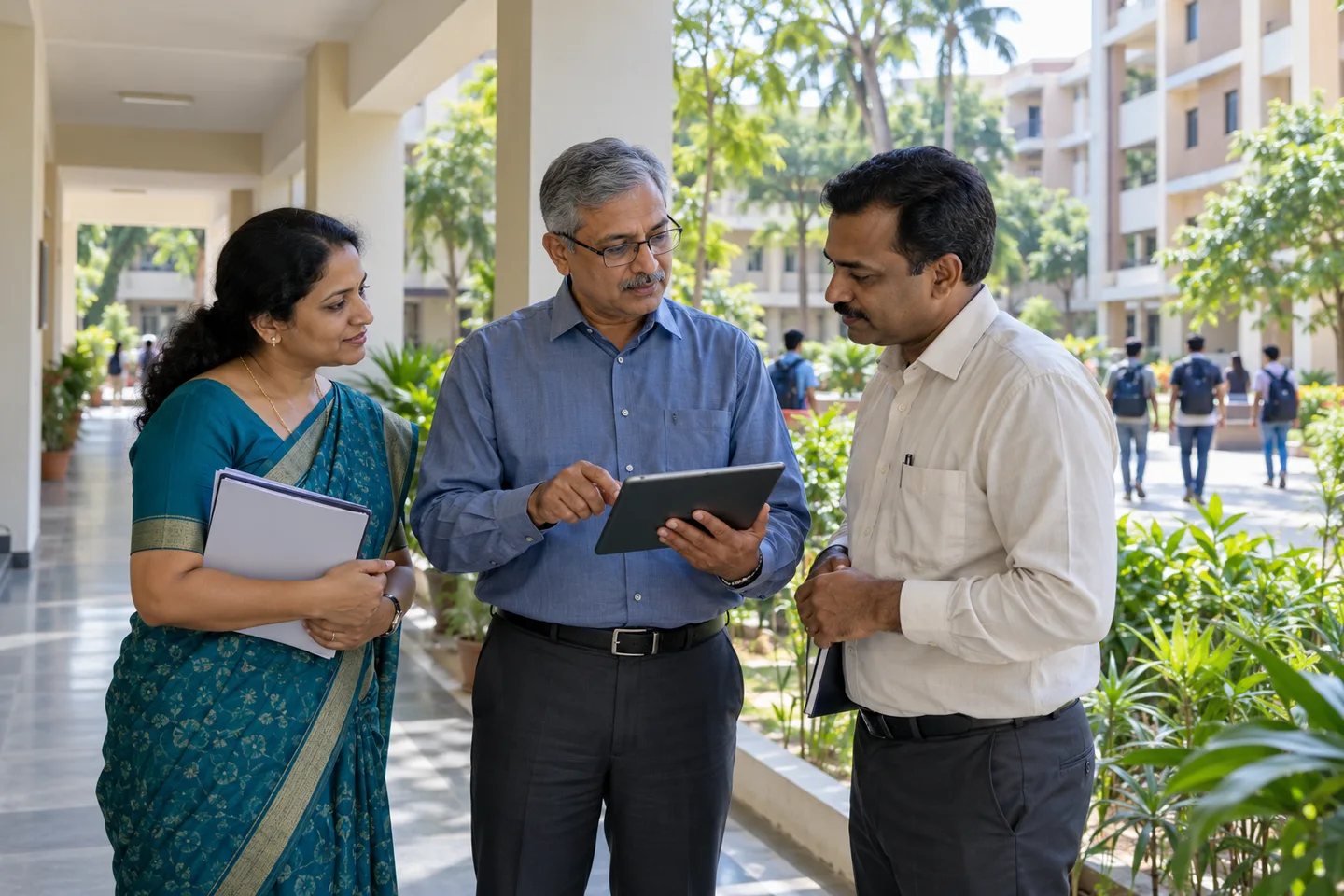
For a university with multiple hostels, scale is more than the number of residents. It is the number of teams, decisions and existing systems that must remain connected. FretBox’s KIIT University customer profile offers a useful starting point for understanding that challenge without assuming another institution should copy its setup.
What matters for your campus
- Large-campus deployment involves people and existing systems.
- KIIT’s customer profile highlights SAP and access-control integration.
- Use the implementation themes to frame your own evaluation.
Picture this on your campus
An incoming resident’s room record, payment status and access arrangements need to be understandable to finance, hostel administration and security. A change made in one workflow should not leave the next team working from an older record.
Illustrative scenarioWhat the existing customer profile establishes
KIIT University is an existing FretBox customer in Bhubaneswar, Odisha. The published FretBox profile identifies SAP ERP integration, retained biometric infrastructure, room and resident administration, and complaints and access records as implementation themes.
Together, these themes show a university implementation connecting institutional records, established infrastructure and daily hostel work. For campus leaders, the practical value is continuity: teams can build on systems they already use while creating a clearer residential operating process.
Why integration matters to a registrar
University records often already have an institutional home. A hostel platform needs a defined relationship with that system, rather than creating another competing source of truth. SAP integration in KIIT’s profile is therefore an important implementation topic.
For another campus, the useful question is which records should come from the ERP, which hostel activities belong in FretBox and how updates are reconciled. Agree identifiers, owners, interfaces and exception handling before making a promise about automatic synchronisation.
Why retaining infrastructure matters to IT
An institution may already have invested in biometric and access-control devices. Retaining that infrastructure can be part of a deployment conversation, as the KIIT profile describes. It still requires a technical review of the actual devices and connection methods.
Ask for an inventory-led assessment. Device compatibility, event delivery, network conditions and fallback procedures need to be scoped for your campus. Existing hardware is valuable when it can participate reliably in the intended workflow.
Why the resident record matters to hostel teams
Room administration, complaints and access records are connected by the resident. Hostel staff need to understand where a student is allotted and which requests require action without moving between unrelated lists.
A large-campus demonstration should show this continuity: begin with the resident and room, follow a service request, then inspect the view appropriate to security or administration. The purpose is to establish usable handovers between teams, not to claim that every department needs the same screen.
Use the story to design your own evaluation
Bring your hostel structure, student identifiers, ERP and access-device inventory to an evaluation. Ask FretBox to demonstrate the shared records and role-specific workflows relevant to your institution. Include representatives who will own both normal operations and exceptions.
If you need quantified outcomes or a detailed reference conversation, request an approved campus reference and the measurement context. The strongest lesson from the KIIT profile is the importance of connecting an established university environment around residential operations. Your scope and rollout should follow your own readiness.
- List existing systems and devices before the demo.
- Map hostel, finance, administration and security handovers.
- Agree the source of truth for shared records.
- Test the resident journey and one exception end to end.
- Request an approved reference for comparable campus scope.