
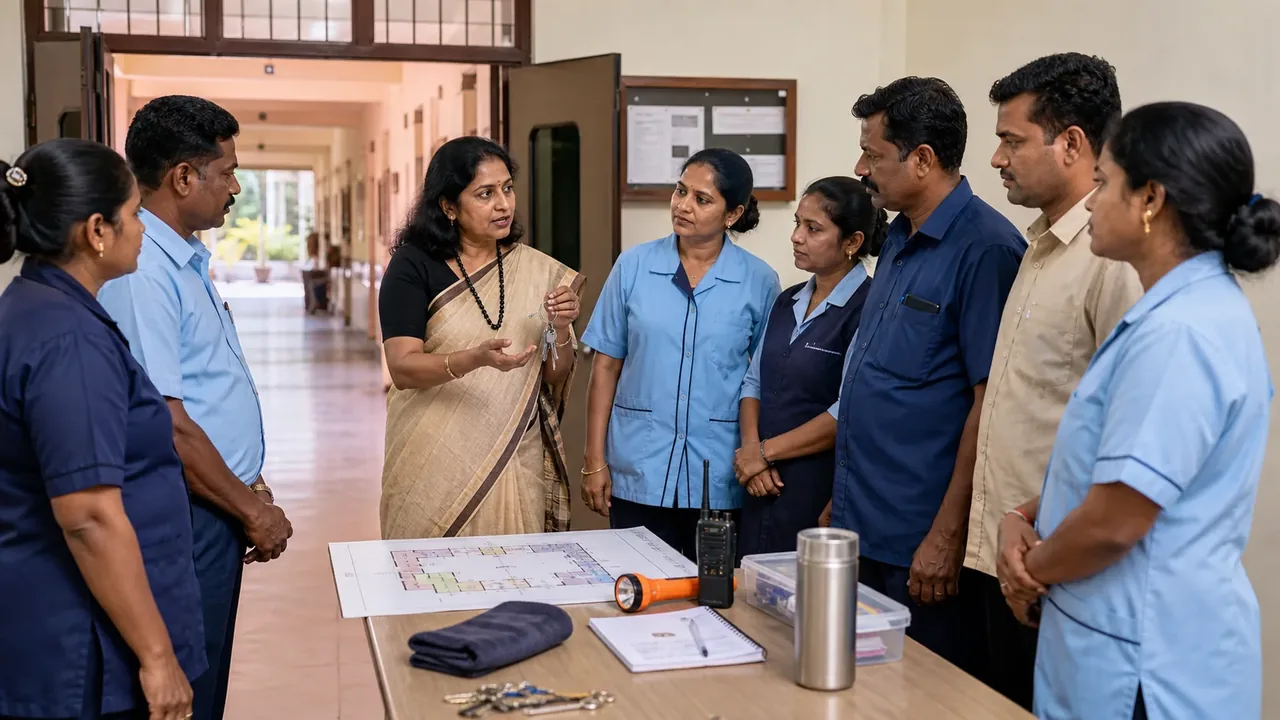
Induction is complete when a worker can perform normal duties, protect dignity and respond correctly to exceptions—not when an attendance sheet is signed.
Residential staff work inside students' living environment. Even roles focused on cleaning, repairs, food or gates can encounter personal information, distress, conflict and emergencies. Every employee and contractor needs role-appropriate induction before independent duty.
Start with role and limits
Explain the service outcome, work area, shift, supervisor, authority, records, tools and prohibited actions. A caretaker may route complaints and control keys but may not investigate disciplinary allegations; a guard may protect immediate safety but should not create personal rules at the gate.
Teach the hostel as a living community
- Resident dignity, privacy and respectful language.
- Access limits for rooms and personal spaces.
- Safeguarding, anti-ragging and sexual-harassment reporting routes.
- Non-discrimination, disability inclusion and language sensitivity.
- How to respond when a student is upset, angry or recording an interaction.
Walk the actual workplace
Show posts, rooms, stores, restricted areas, escape routes, assembly points, first-response resources, accessible routes, utility controls and reporting points. Staff should practise finding these at night or during an outage where relevant.
Practise normal workflows
- Shift start and handover.
- Complaint receipt, priority and closure evidence.
- Keys, stock, tools and contractor access.
- Cleaning, food, patrol or maintenance records appropriate to the role.
- Communication with residents and escalation to the correct owner.
Practise exceptions and emergencies
Use short spoken scenarios and demonstrations rather than dense manuals: an unknown person seeks entry, a resident is unresponsive, water fails, a fire alarm activates, a student reports harassment, a worker discovers prohibited conduct or an allegation concerns a colleague. Test first action, whom to call, what to record and what not to promise.
Adapt training for frontline accessibility
Use the language workers understand, visual job aids, demonstrations, teach-back and supervised practice. Do not equate literacy with competence. Provide easy access to current contacts and critical steps without requiring a complex app or long document.
Induction completion checklist
- Identity, employment or contractor authorisation verified.
- Role, limits, supervisor and shift explained.
- Resident dignity, privacy and safeguarding understood.
- Workplace and emergency routes walked.
- Normal workflow demonstrated under supervision.
- At least three exception scenarios passed.
- Required tools, PPE, credentials and contacts issued.
- Competence gap has a named training follow-up.
Conclusion
A confident frontline team prevents small misunderstandings from becoming resident harm or institutional incidents. Induction should continue through coached shifts, observation and refresher practice—not end on the worker's first morning.
Official references
- Primary sources reviewed 22 August 2026:
- National Anti-Ragging Portal: regulations, advisories and helpline
- UGC student-centric regulations
- Ministry of Home Affairs: Emergency Response Support System 112
- DEPwD: notified accessibility standards and guidelines
- Implementation note: supplement this induction with role-specific legal, technical, food-safety, occupational-safety and professional training.
Revision history
Editorial language, consistency and source audit completed. India-specific operating context retained.
See something we should improve?
Point out a correction, add a missing perspective or share a stronger source.