
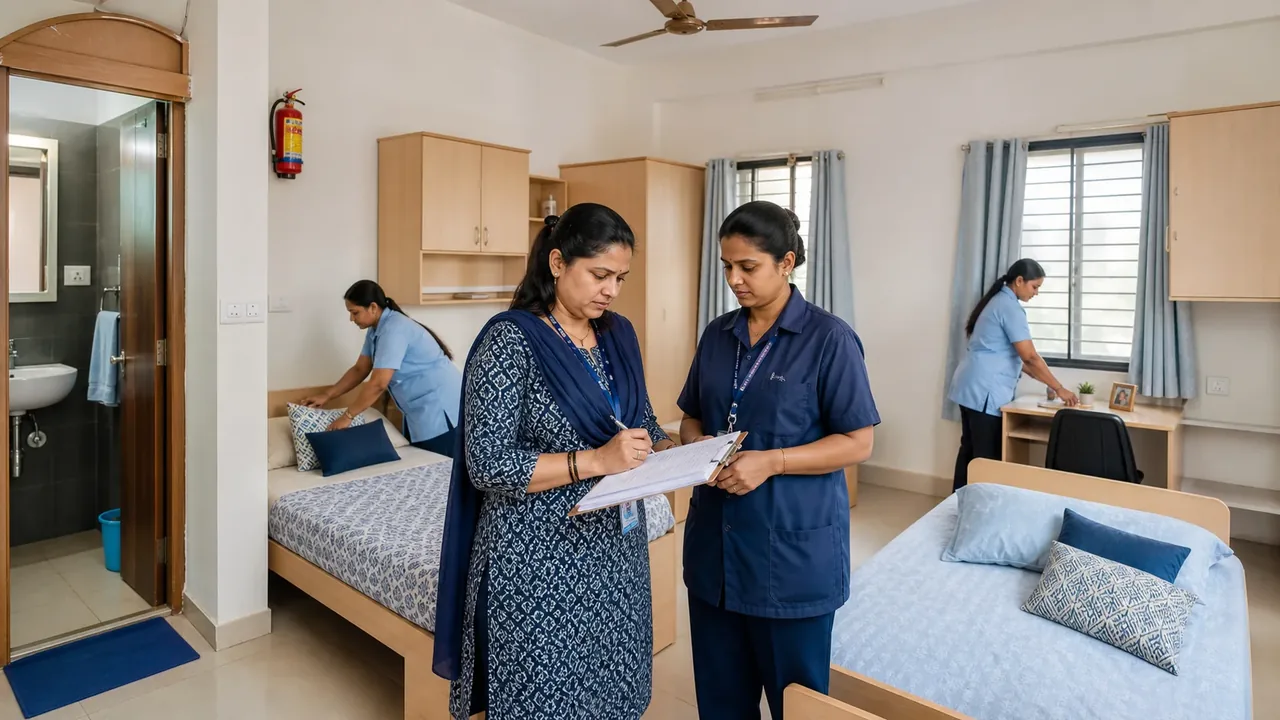
A room is ready only when it is safe, clean, functional, correctly inventoried and suitable for the resident assigned to it.
Room readiness is the point where maintenance records meet a resident's lived reality. A work order marked closed does not prove that the light works, the lock is secure, the mattress is usable or the approved accessibility feature is present.
Create a controlled room list
Inspect from the approved bed-level inventory. Show room, bed, intended status, accessibility or reserved use, last occupant, open work and inspector. Prevent simultaneous allotment and maintenance changes from creating conflicting versions.
Cleanliness and sanitation
- Floor, walls, fan, windows, ledges and furniture visibly clean.
- Bathroom, drains, taps and fixtures cleaned and functioning.
- No pest evidence, avoidable odour, waste or abandoned belongings.
- Mattress and soft furnishings dry, clean and fit for approved use.
- Cleaning chemicals and tools removed before handover.
Furniture, fixtures and inventory
- Correct number of beds, mattresses, desks, chairs and storage units.
- Furniture stable, edges safe and drawers or shutters usable.
- Room and bed identifiers agree with the inventory record.
- Existing cosmetic damage recorded consistently before arrival.
- Keys, cards and other controlled items prepared for issue.
Utilities and safety
- Lights, fans and approved electrical outlets tested by competent staff.
- No exposed wiring, unsafe adapters, leakage or unresolved dampness.
- Windows, doors, locks and ventilation operate correctly.
- Water supply, drainage and hot-water arrangements work as designed.
- Escape route and required fire or emergency provisions remain unobstructed.
Accessibility and resident-specific requirements
Verify the complete route from entrance to room, bathroom, dining and essential services—not only a room label. Confirm approved furniture, grab supports, visual or audible provisions, lower controls or other accommodations before the resident travels. Do not disclose personal medical information on public room lists.
Grade defects by consequence
Classify defects as blocking occupancy, requiring repair before arrival, or suitable for scheduled follow-up with informed acceptance. A room with an unsafe lock, electrical defect, inaccessible assigned route or no reliable water cannot become ready through a managerial tick.
Use two-stage verification
The service team completes the first inspection; hostel or facilities supervision verifies a risk-based sample and every room previously blocked. Record the inspector, time, defects, evidence and closure. Reinspect after repair rather than accepting a changed ticket status.
Final room-readiness checklist
- Room and bed identity match the master inventory.
- Cleaning and sanitation accepted.
- Furniture and approved inventory complete.
- Water, drainage, lighting, fan, outlets, door and lock tested.
- Safety and accessibility requirements verified.
- Keys or credentials reconciled.
- No blocking defect remains; follow-ups have owner and date.
- Room status changed to ready by an authorised role.
Conclusion
The room-readiness record becomes the foundation of check-in and later damage reconciliation. Done well, it protects the student's first night and gives maintenance, hostel and finance teams the same factual starting point.
Official references
- Primary sources reviewed 22 August 2026:
- DEPwD: notified accessibility standards and guidelines
- Bureau of Indian Standards: National Building Code of India 2016
- CPCB: Guidelines for Management of Sanitary Waste
- Implementation note: use competent and authorised professionals for electrical, fire, lift, structural or other regulated systems.
Revision history
Editorial language, consistency and source audit completed. India-specific operating context retained.
See something we should improve?
Point out a correction, add a missing perspective or share a stronger source.