
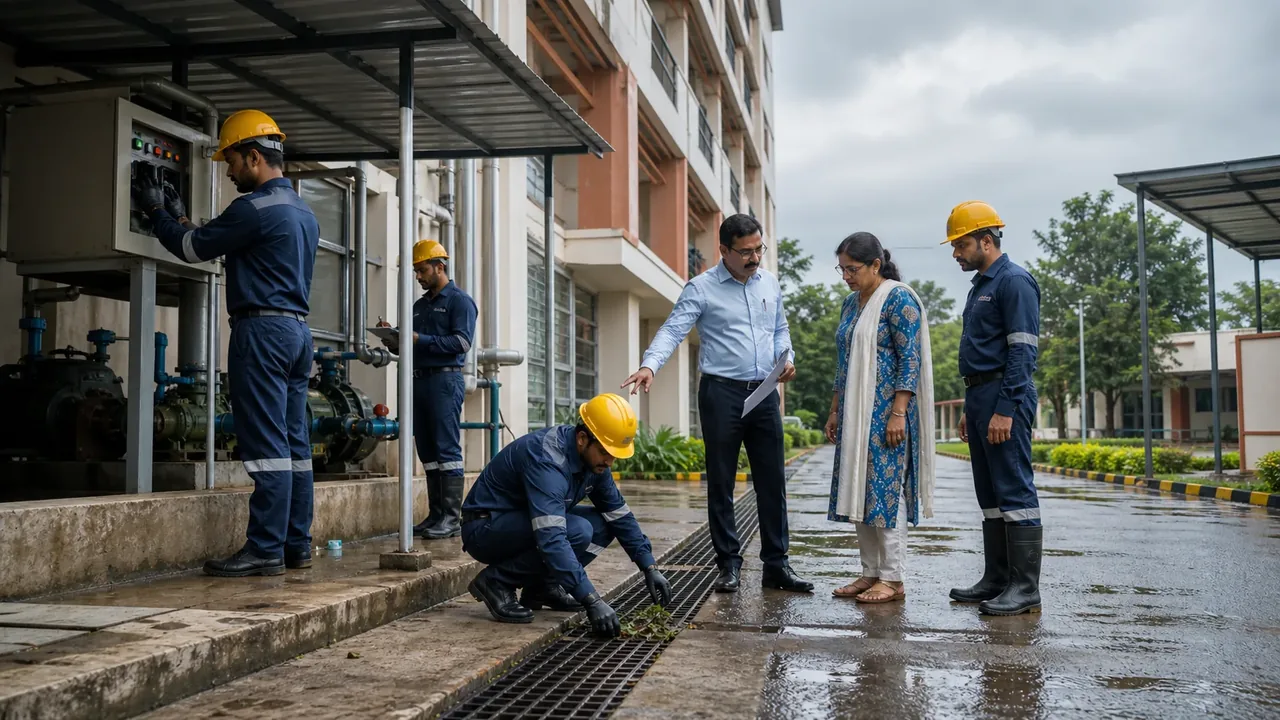
Monsoon readiness is built before the first heavy rain by removing drainage, electrical, access and communication failures that compound one another.
Monsoon risk varies by region, terrain, building and local warning. On a residential campus, water ingress can combine with electrical risk, blocked movement, contaminated water, transport delays, mosquitoes and supply disruption. Preparation must connect facilities with resident communication and emergency decisions.
Map water before it arrives
- Inspect roofs, terraces, gutters, downpipes, balconies and known seepage points.
- Clear and safely test surface drains, gratings, sumps and pumps.
- Map low-lying rooms, basements, electrical areas and access routes.
- Prevent waste, leaves and construction material from blocking drainage.
- Define safe temporary barriers and alternate pedestrian routes.
Protect electrical and utility systems
Competent personnel should inspect exposed equipment, earthing, distribution areas, pumps, backup power and water systems. Keep electrical panels and generators protected without obstructing ventilation or access. Establish safe isolation and escalation procedures; residents and untrained staff must never improvise around wet electrical equipment.
Prepare rooms and common areas
- Repair leaks, loose glazing, unsafe ceiling areas and damaged external doors.
- Check dampness, mould risk, ventilation and drying arrangements.
- Keep stairs, corridors and entrances slip-resistant and well lit.
- Secure outdoor furniture, signage and loose materials.
- Identify safe rooms if part of a building becomes temporarily unusable.
Protect water, food and health
Verify drinking-water protection, tank and filter controls, drainage separation, waste collection and pest management. Mess teams should plan delayed deliveries and safe stock levels without overstocking perishables. Coordinate mosquito-control and public-health actions through the authorised campus functions.
Plan movement and continuity
- Monitor official weather and local authority information.
- Set thresholds for restricting routes, events, transport or building areas.
- Maintain emergency access for ambulance, fire and utility response.
- Prepare power, network, food, water and staffing continuity for realistic outage periods.
- Identify residents requiring mobility, medical or communication support.
Communicate before conditions worsen
Tell residents which routes to avoid, how to report leakage or hazards, where verified updates will appear and what to do during power or transport disruption. Avoid dramatic forwarding of unverified weather messages. Every restriction should include the reason, affected area and next update.
Monsoon readiness checklist
- Drainage, roofs, pumps and water paths inspected.
- Electrical and backup systems reviewed by competent teams.
- Leak, slip, mould and loose-object risks controlled.
- Drinking water, mess supplies, waste and pest plans ready.
- Alternate routes, emergency lanes and resident support identified.
- Weather monitoring and decision authority assigned.
- Contact tree, resident messages and post-rain inspection process tested.
After every significant rain
Inspect known risk points, electrical areas, roofs, drains, water quality concerns, damaged trees or structures and resident reports. Record what failed and update the pre-monsoon plan; recurring emergency pumping or buckets are evidence of an unresolved system problem.
Official references
- Primary sources reviewed 22 August 2026:
- India Meteorological Department: warnings and services
- Bureau of Indian Standards: National Building Code of India 2016
- CPCB: salient features of Solid Waste Management Rules
- Ministry of Home Affairs: Emergency Response Support System 112
- Implementation note: follow official local warnings and obtain competent structural, electrical, water, tree and public-health review for identified risks.
Revision history
Editorial language, consistency and source audit completed. India-specific operating context retained.
See something we should improve?
Point out a correction, add a missing perspective or share a stronger source.