
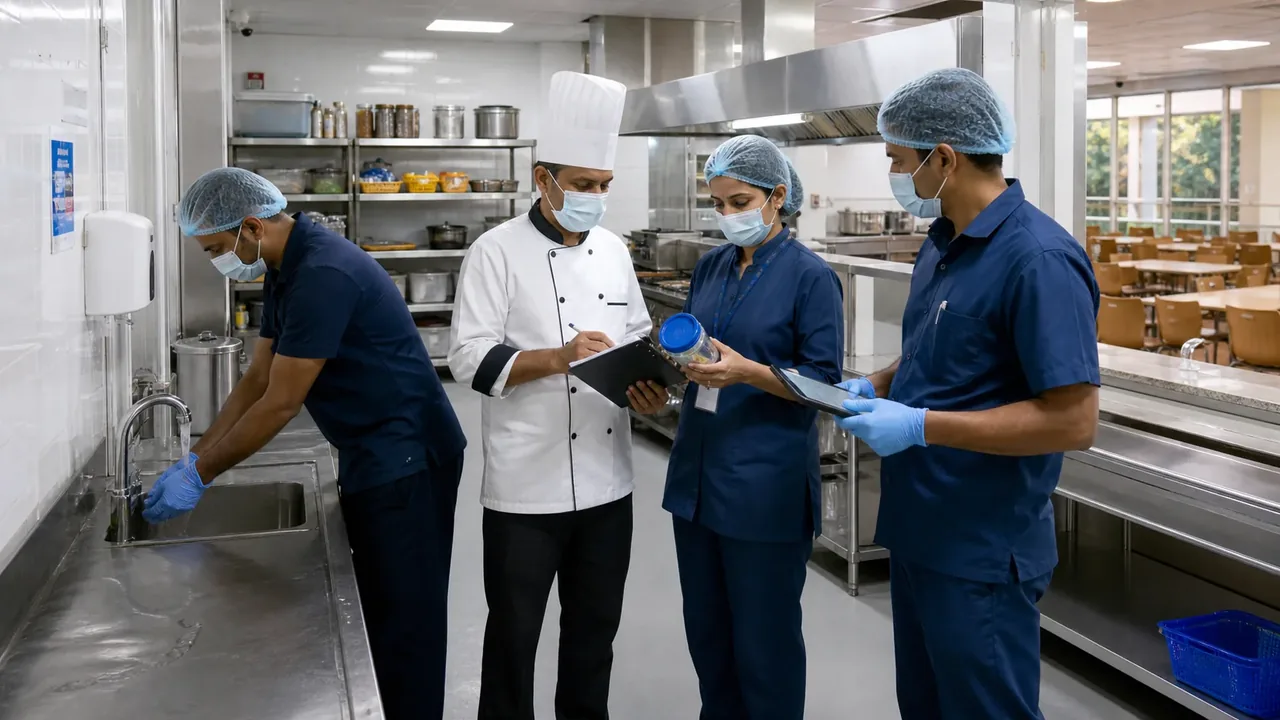
A mess is ready when safe inputs, competent people, functioning equipment and verified controls work together through a complete trial service.
Restarting a hostel mess after a low-occupancy or shutdown period is not the same as switching on a kitchen. Stored ingredients, water systems, pests, equipment, staffing and vendor supply can all change while service is paused.
Confirm governance and permissions
- Verify licences, registrations, contracts and responsible supervisors applicable to the operation.
- Confirm approved menu cycle, expected covers, service timings and authorised special requirements.
- Review vendor mobilisation, escalation, testing and rejection authority.
- Ensure incident, illness, complaint and recall procedures are available to the team.
Inspect water, premises and pest control
Verify potable-water arrangements and any required testing through the institution's competent function. Inspect tanks, filters, drains, handwashing, waste areas, grease management, ventilation and pest evidence. Deep cleaning is not complete until chemicals, tools and residues are safely controlled.
Commission equipment and cold chain
- Service and safely test cooking, holding, refrigeration, ventilation and dishwashing equipment.
- Calibrate or verify suitable measuring instruments.
- Confirm backup arrangements for water, power, LPG or other approved energy supply.
- Record equipment defects and block unsafe items from use.
Reset stores and receiving
Remove expired, damaged, contaminated or untraceable stock through the approved process. Clean stores before replenishment. Verify supplier schedules, receiving inspection, segregation, date control and stock rotation. Do not allow opening-week volume pressure to weaken rejection controls.
Prepare and brief the people
Confirm staffing by shift and train workers on personal hygiene, illness reporting, handwashing, cross-contamination prevention, allergen or authorised diet communication, cleaning chemicals, equipment safety and incident escalation. Training should be demonstrated in practice, not recorded only through attendance.
Run a complete trial service
Simulate receiving, storage, preparation, cooking, holding, service, replenishment, plate return, cleaning and waste handling at a realistic volume. Observe bottlenecks, queue design, hot and cold controls, handwashing access and end-of-service records. Correct failures before residents become the test.
Mess reopening checklist
- Responsible manager, permissions and vendor contacts verified.
- Water, hygiene, drainage, pest and waste controls accepted.
- Equipment and measuring instruments commissioned.
- Stores cleared and approved supplies received safely.
- Shift staffing and competence verified.
- Menu, expected covers and special requirements communicated.
- Trial service completed with corrective actions closed.
- Resident feedback and food-incident routes ready.
Conclusion
Opening-week food service shapes trust quickly. A controlled restart gives the mess team time to find weak links before peak demand and makes safe service a repeatable routine rather than a launch-day performance.
Official references
- Primary sources reviewed 22 August 2026:
- FSSAI: Schedule 4 hygiene requirements
- FSSAI Food Safety Training and Certification
- CPCB: salient features of Solid Waste Management Rules
- Implementation note: obtain review from the institution's competent food-safety, engineering and public-health functions and confirm current requirements.
Revision history
Editorial language, consistency and source audit completed. India-specific operating context retained.
See something we should improve?
Point out a correction, add a missing perspective or share a stronger source.