
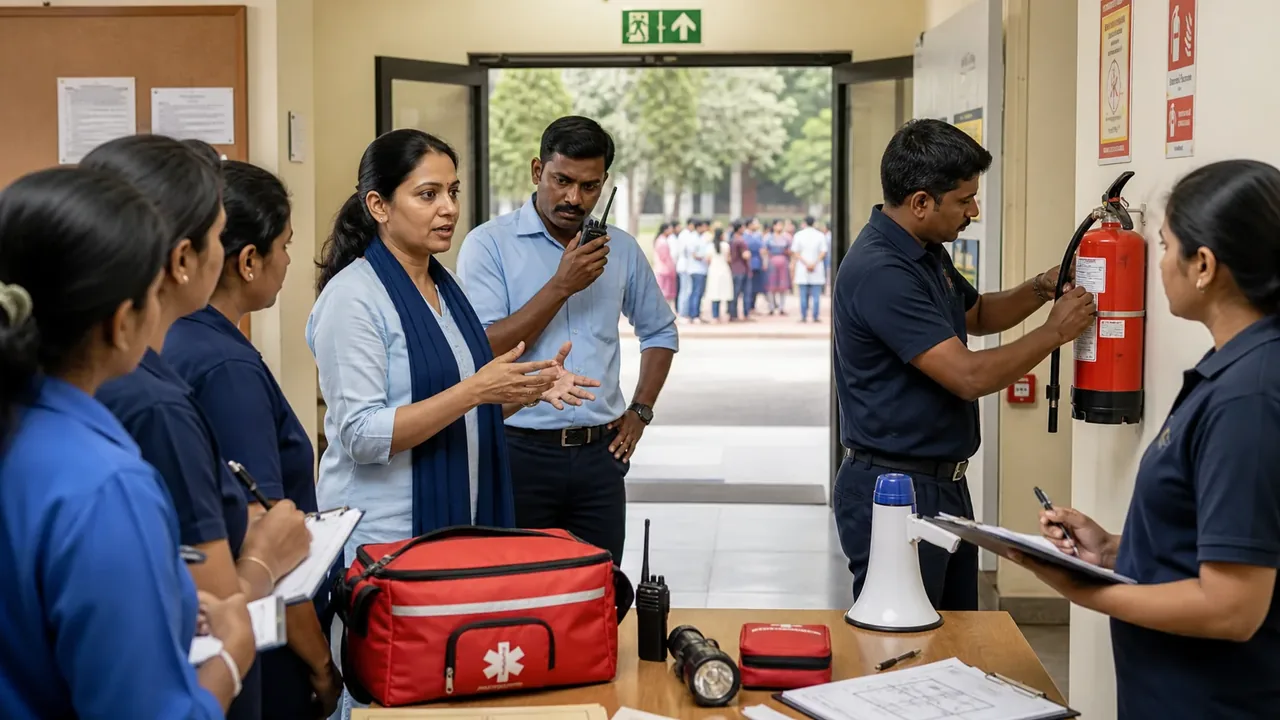
An emergency plan is usable only when the current shift can find the equipment, contact the right help and act without dangerous delay.
Contact lists and equipment registers create false confidence when numbers are stale, supplies are inaccessible or staff wait for approval during urgent danger. Readiness must be tested from the perspective of the person actually on duty at night, during an outage or under pressure.
Build a role-based contact tree
- Emergency services, including 112 where applicable.
- Campus medical response and approved transport.
- Warden, duty officer, security control and senior escalation.
- Facilities contacts for power, water, lift, fire and building hazards.
- Student welfare, counselling, anti-ragging and sexual-harassment support routes.
- Communication authority and family or emergency-contact decision roles.
Verify, do not merely publish
Test numbers and after-hours coverage on an approved schedule. Record who answered, expected response, alternate contact and correction owner. Display essential contacts where staff can reach them during system failure while protecting restricted personal numbers.
Inspect equipment by use, not count
Locate and inspect first-aid resources, radios, torches, alarms, emergency lighting, extinguishers and other approved equipment through competent functions. Confirm access, condition, inspection date, instructions and responsible role. Never encourage untrained use of specialist equipment.
Test transport, access and handover
- Emergency vehicle route and gate access remain clear.
- Building and room location can be communicated precisely.
- Lift or mobility contingencies are defined.
- A responsible person can meet responders and guide them.
- Resident information needed for professional handover can be accessed lawfully and proportionately.
Use progressive drills
Begin with a short tabletop scenario, then test communications and finally conduct an approved practical drill. Vary time, staffing and failure conditions. Include disability access and night response. Announce or manage drills appropriately so learning does not create avoidable panic or trauma.
Observe decisions, not theatre
Measure recognition, first action, call time, information quality, access, accountability and professional handover. Observers should record system gaps without humiliating individuals. A drill is successful when it reveals improvements—not when it produces a perfect photograph.
Emergency-readiness checklist
- Current role-based contacts tested, including after-hours alternatives.
- Equipment accessible, inspected and assigned.
- Emergency routes, assembly areas and responder access clear.
- Duty staff know immediate authority and escalation triggers.
- Medical, fire, distress, missing-resident and utility scenarios practised.
- Accessibility and night conditions included.
- Every drill gap has an owner, deadline and retest.
Conclusion
Preparedness is visible in the first minutes. Current contacts, usable equipment, clear authority and honest drills help frontline teams move from uncertainty to professional response while preserving dignity and accurate handover.
Official references
- Primary sources reviewed 22 August 2026:
- Ministry of Home Affairs: Emergency Response Support System 112
- Ministry of Health and Family Welfare: National Ambulance Services
- Bureau of Indian Standards: National Building Code of India 2016
- National Anti-Ragging Portal: regulations, advisories and helpline
- Implementation note: drills and equipment checks require review by the institution's competent emergency, medical, fire, facilities and accessibility functions.
Revision history
Editorial language, consistency and source audit completed. India-specific operating context retained.
See something we should improve?
Point out a correction, add a missing perspective or share a stronger source.