
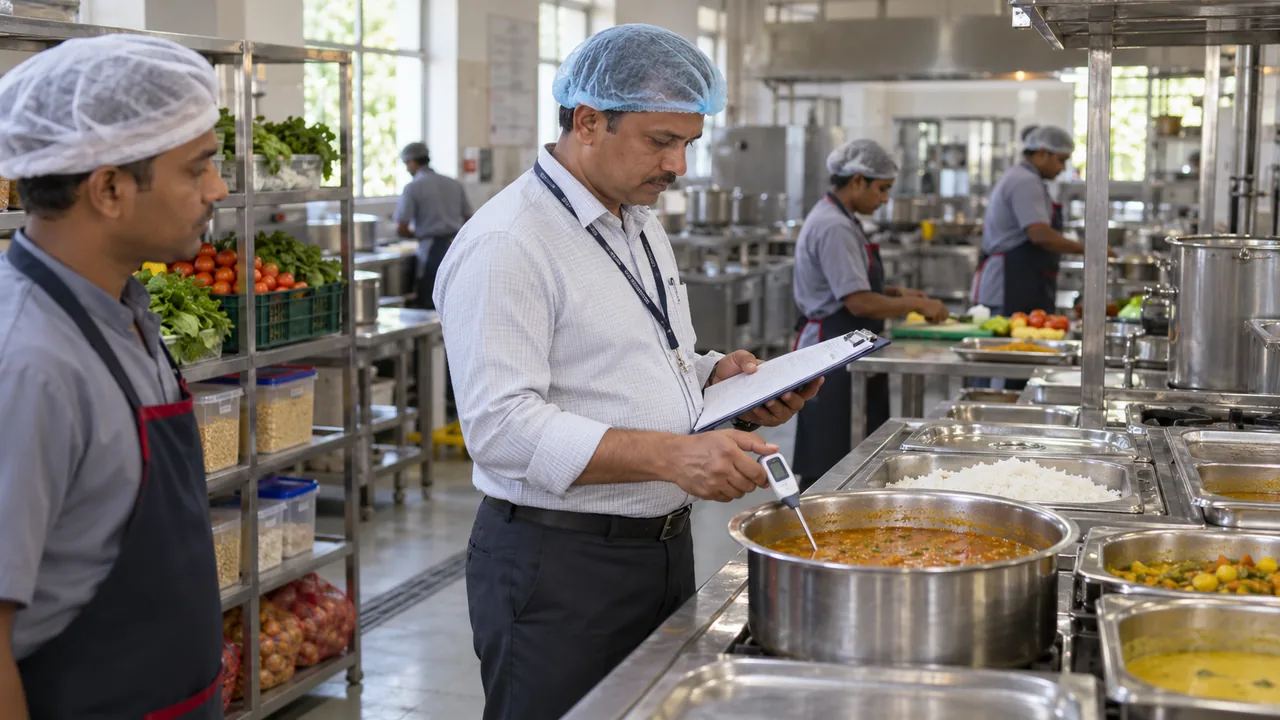
A checklist supports trained judgement; it does not replace competent supervision, approved procedures or applicable food-safety requirements.
Adapt this checklist to the institution’s food-safety plan, menu, equipment and legal obligations. Record exceptions and corrective actions; a page of ticks without verification creates false confidence.
Receiving and storage
- Approved supplier and delivery details verified
- Packaging, condition, dates and signs of contamination checked
- Cold or frozen items accepted only within the approved control limits
- Raw and ready-to-eat food segregated
- Stock labelled and rotated using the approved method
- Chemicals stored away from food and access controlled
Preparation and service
- Handwashing facilities, protective practices and illness reporting followed
- Food-contact surfaces and utensils clean and segregated as required
- Cooking, holding and reheating controls verified with suitable instruments
- Allergen or special-diet instructions communicated without unsupported promises
- Serving counters protected, replenished safely and kept orderly
- Drinking water and ice controls verified
People and dining experience
- Enough trained staff are present for safe service.
- Queue, seating and accessibility problems are addressed.
- Staff communicate respectfully with residents.
- Complaints are acknowledged and urgent safety concerns isolated.
- Substitutions, shortages and restoration times are communicated.
Close and corrective action
Verify cleaning, waste removal, pest evidence, retained samples where required by the approved procedure, equipment shutdown and record completion. Every failed check needs an immediate control, accountable owner and verification of closure.
Revision history
Editorial language, consistency and source audit completed. India-specific operating context retained.
See something we should improve?
Point out a correction, add a missing perspective or share a stronger source.