
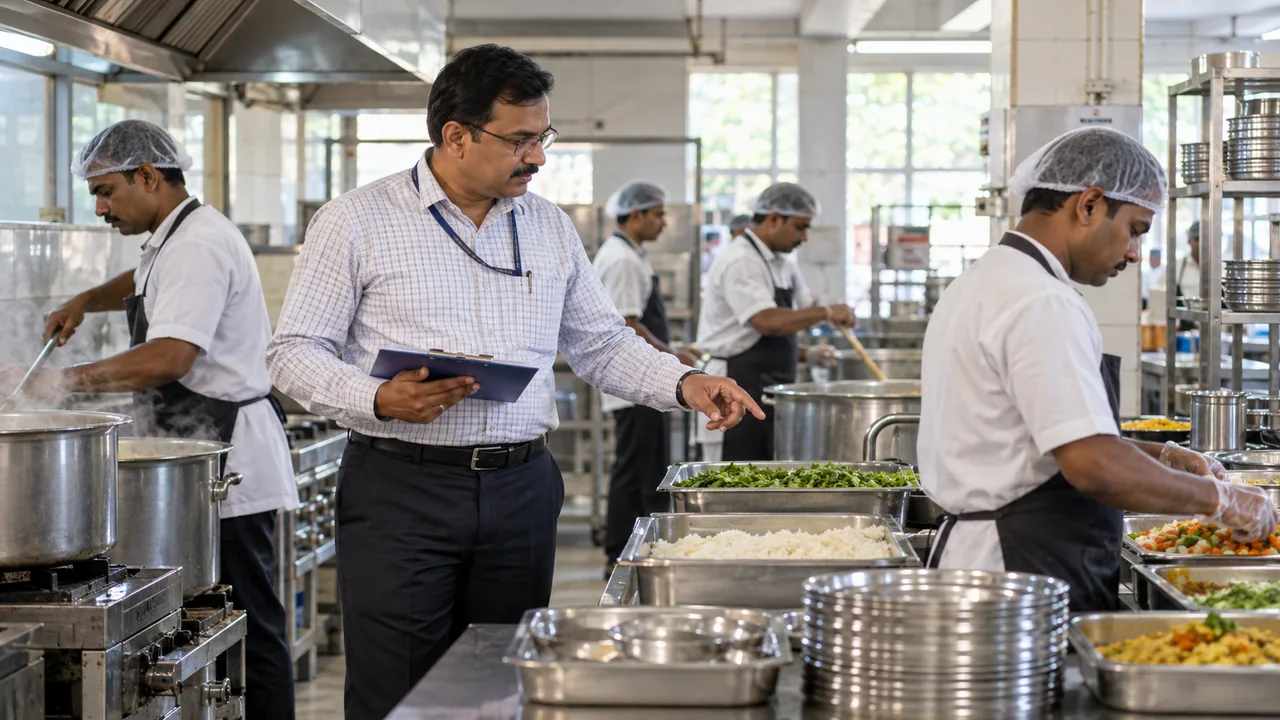
The mess manager owns a complete service system—from safe receipt and preparation to queue experience, feedback, records and corrective action.
A university mess serves a large population on a fixed rhythm. Food safety is non-negotiable, but the role also requires menu planning, staffing, purchasing control, waste reduction, resident communication and respectful service.
Core responsibilities
- Operate approved food-safety and hygiene controls.
- Plan nutritionally varied menus within budget and local preferences.
- Forecast attendance, production and staffing for each meal.
- Control receiving, storage, stock rotation and wastage.
- Verify cleaning, pest-control and equipment routines.
- Train staff in hygiene, allergen awareness, respectful behaviour and incident reporting.
- Capture resident feedback and close recurring problems.
- Maintain licences, records and vendor evidence required by the institution.
A manager must be present at the service
Reports do not reveal queue behaviour, portion consistency, temperature, availability near closing time or how staff speak to residents. Managers should observe different meal periods and act on what residents actually experience.
Immediate escalation
Stop and escalate suspected contamination, unsafe temperature control, pest evidence, water-quality concerns, serious allergic reaction, clusters of illness or deliberate record falsification. Preserve relevant samples and records according to the institution’s approved procedure; seek qualified medical and food-safety direction.
Balanced measures
- Safety and hygiene checks completed
- Meal availability and average queue time
- Resident feedback themes and closure time
- Food waste per meal or resident served
- Menu adherence and approved substitutions
- Staff training and health-control compliance
- Vendor quality and rejection trends
Revision history
Editorial language, consistency and source audit completed. India-specific operating context retained.
See something we should improve?
Point out a correction, add a missing perspective or share a stronger source.