
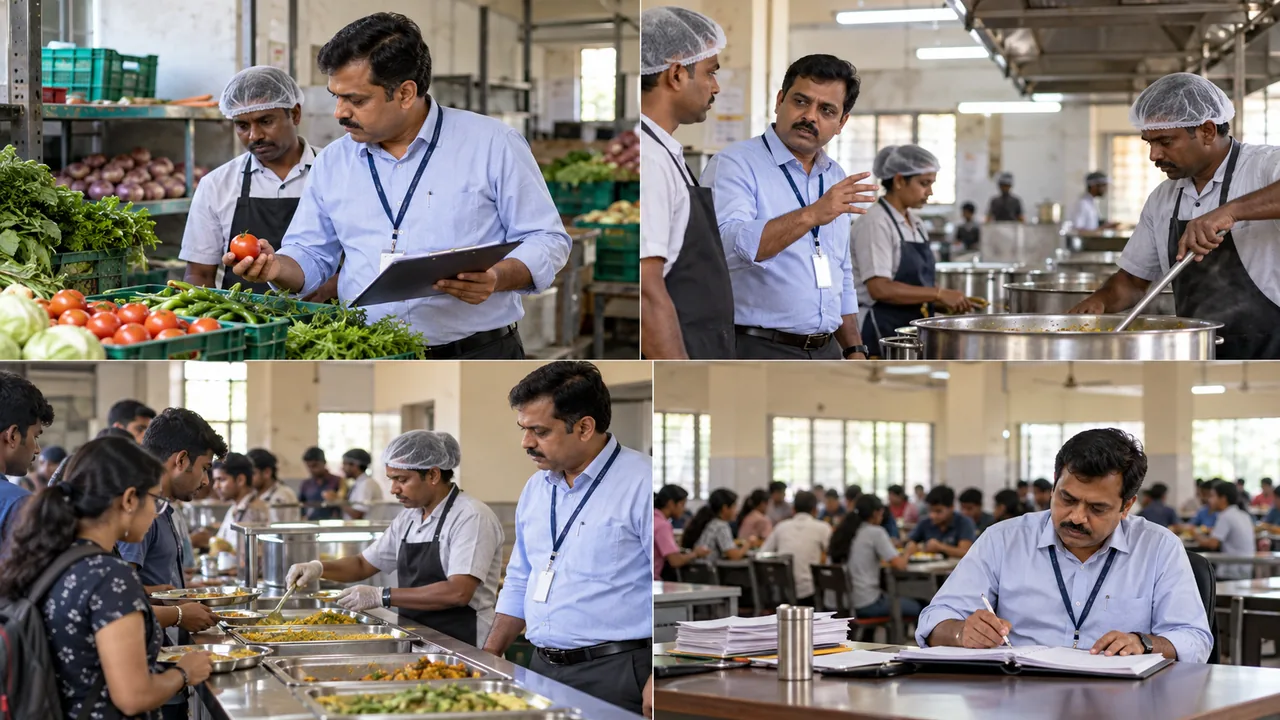
A mess manager’s day follows the food journey: verify inputs, control preparation, observe service, learn from feedback and close with records.
Food service begins before residents enter the dining hall. The manager must see receiving, storage, preparation and cleaning—not only the finished meal.
Before the first service
- Review staffing, menu, expected covers and special authorised requirements.
- Verify receiving conditions and reject unacceptable supplies.
- Check storage, water, sanitation and critical equipment.
- Confirm preparation sequence, cross-contamination controls and cleaning assignments.
- Brief the team on the day’s risks and service expectations.
During meals
Observe queues, replenishment, portion consistency, dining-area cleanliness and staff-resident interactions. Correct unsafe behaviour immediately. Record substitutions and significant service failures, then explain them honestly to residents.
Between services
Review waste and leftovers under the approved food-safety process, inspect cleaning, respond to feedback and prepare the next meal. Avoid waiting until month-end to discover repeated short supply, poor acceptance or a failing appliance.
Close the day
- Reconcile production, consumption, waste and key stock movements.
- Confirm cleaning and pest-prevention controls.
- Record equipment defects and temporary restrictions.
- Review complaints and communicate next actions.
- Plan the next day’s attendance, menu, staff and supplies.
Sources and professional review anchors
- Primary sources for role and implementation review:
- FSSAI food-safety regulations
- FSSAI hygiene requirements
- FSSAI Food Safety Training and Certification
- Implementation note: adapt duties, authority, training and escalation to the university’s approved role charter, current law and competent professional advice.
Revision history
Editorial language, consistency and source audit completed. India-specific operating context retained.
See something we should improve?
Point out a correction, add a missing perspective or share a stronger source.