
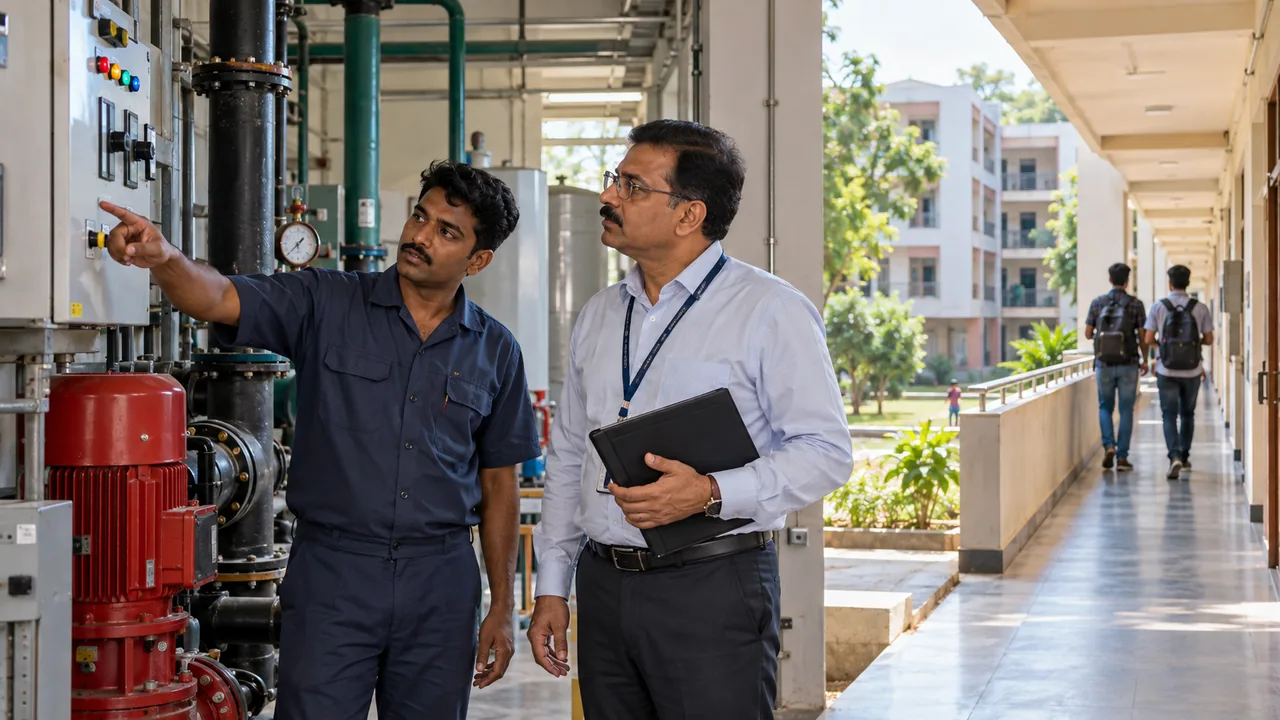
The facility manager turns buildings and utilities into dependable services by controlling risk, ownership, evidence and preventive work.
Campus facility management is not simply responding to repairs. It connects asset knowledge, statutory checks, preventive maintenance, vendor control, energy and water continuity, housekeeping standards and communication with building users.
Core responsibilities
- Maintain an accurate asset and critical-equipment register.
- Plan inspections and preventive maintenance by risk and manufacturer guidance.
- Operate a prioritised work-order process with service levels.
- Protect continuity of water, power, sanitation, lifts and fire-safety systems.
- Control contractors through permits, supervision and completion evidence.
- Track budgets, spares, warranties and lifecycle replacement needs.
- Communicate disruptions and temporary controls clearly.
- Report recurring failures and capital risks to leadership.
Daily, weekly and monthly rhythm
Daily work covers critical alarms, hazards, overdue priority jobs and planned shutdowns. Weekly reviews examine repeat complaints, contractor performance and pending parts. Monthly reviews compare preventive completion, downtime, cost, consumption and asset risk.
Decisions that require escalation
- Any condition presenting immediate danger or requiring evacuation
- Loss of a critical utility beyond the approved contingency window
- Suspected structural, electrical, fire or water-quality risk
- Repeated failure of a high-risk asset
- Work that exceeds delegated budget or changes building use
- Contractor conduct affecting safety, dignity or campus security
Measures that reveal reliability
Track preventive work completed on time, repeat failures, response and restoration time by severity, critical-asset downtime, open safety actions, consumption anomalies and resident communication. A low complaint count is not proof of a healthy building if reporting is difficult.
Sources and professional review anchors
- Primary sources for role and implementation review:
- BIS Guide for Using the National Building Code of India 2016
- Department of Empowerment of Persons with Disabilities standards and guidelines
- Bureau of Energy Efficiency resources
- Implementation note: adapt duties, authority, training and escalation to the university’s approved role charter, current law and competent professional advice.
Revision history
Editorial language, consistency and source audit completed. India-specific operating context retained.
See something we should improve?
Point out a correction, add a missing perspective or share a stronger source.