
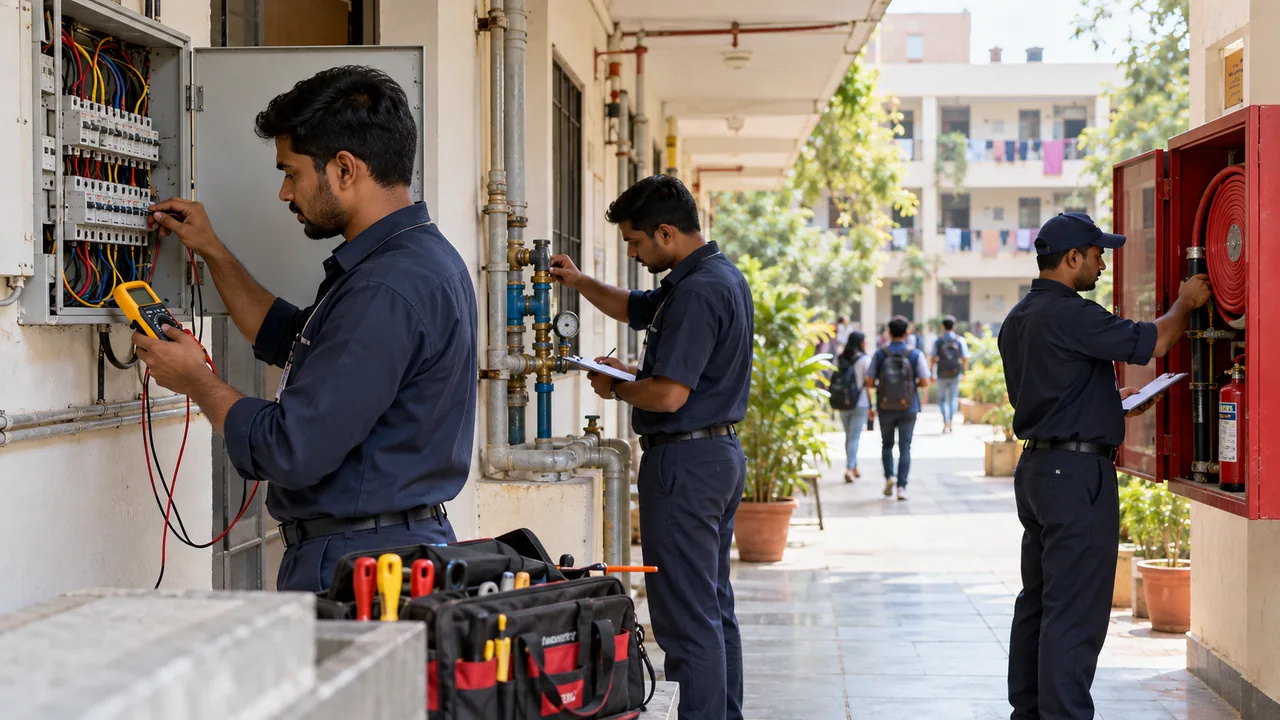
A useful calendar is asset-specific, risk-ranked, owned and evidenced; a generic monthly checklist is not enough.
Preventive maintenance should reflect equipment guidance, statutory obligations, local climate, asset condition, usage and failure consequences. The intervals below are planning prompts, not substitutes for competent technical advice.
Daily and weekly controls
- Critical alarms, pumps, water storage, electrical rooms and backup power
- Fire exits, emergency lighting and visible obstructions
- Lift status and fault follow-up
- Water leakage, sanitation hotspots and waste areas
- High-use doors, access equipment and common-area lighting
- Open temporary repairs and overdue safety actions
Monthly and quarterly planning
- Test backup systems under safe, approved conditions.
- Inspect distribution boards, earthing records and thermal or load concerns through qualified personnel.
- Service pumps, motors, ventilation and water-treatment equipment as specified.
- Review roof, drainage and waterproofing before monsoon periods.
- Inspect room fixtures and furniture by a rotating sample.
- Reconcile critical spares, warranties and vendor service reports.
Annual and seasonal readiness
Plan major servicing and intrusive work during low-occupancy periods. Before monsoon, summer peaks and admission season, review capacity, drainage, cooling, water, backup power and contractor coverage. Coordinate statutory inspection dates with the authorised university function.
Evidence of completion
Each task should show the asset, location, required skill, method or reference, due date, completion evidence, defects found, follow-up owner and next due date. Supervisors should sample quality rather than accepting bulk closure.
Sources and professional review anchors
- Primary sources for role and implementation review:
- BIS Guide for Using the National Building Code of India 2016
- Department of Empowerment of Persons with Disabilities standards and guidelines
- Bureau of Energy Efficiency resources
- Implementation note: adapt duties, authority, training and escalation to the university’s approved role charter, current law and competent professional advice.
Revision history
Editorial language, consistency and source audit completed. India-specific operating context retained.
See something we should improve?
Point out a correction, add a missing perspective or share a stronger source.