
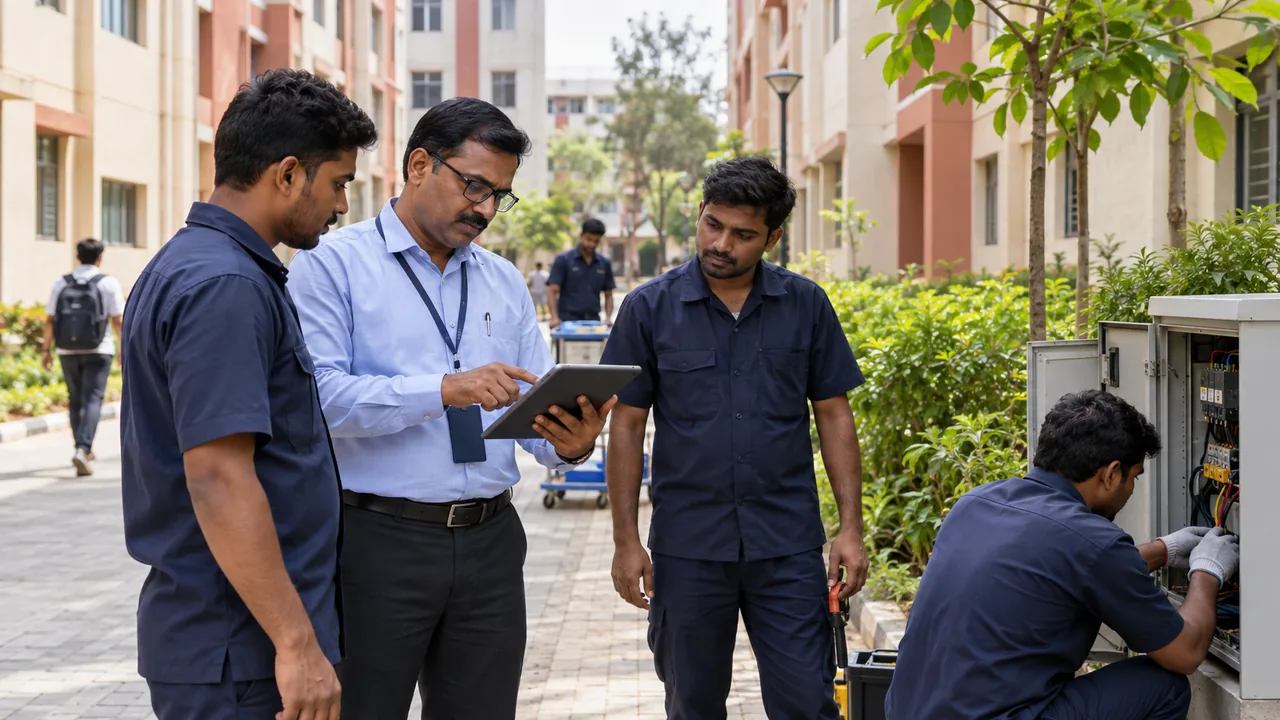
The best facility-management day combines early risk visibility, disciplined field verification and protected time for preventive planning.
A facility manager’s calendar can be consumed by urgent calls. A deliberate rhythm prevents today’s repairs from displacing the work that stops tomorrow’s failures.
Start with critical systems
- Review alarms, utility interruptions and the previous shift log.
- Confirm temporary safety controls remain effective.
- Check planned shutdowns, high-risk permits and contractor attendance.
- Assign priority work with a named technician and target restoration time.
- Notify affected users before avoidable uncertainty spreads.
Spend time where the work happens
Inspect a sample of open and recently closed jobs. Speak with technicians and building users. A dashboard may say a leak is closed while dampness, cleaning or damaged belongings remain unresolved. Closure should reflect restored service, not only a technician’s departure.
Protect planning time
Reserve part of the day for preventive schedules, spares, vendor follow-up, drawings, warranties and replacement proposals. Use failure history to challenge recurring patches. If the same asset repeatedly fails, define the underlying decision needed.
End with continuity
Update the open-risk list, confirm overnight coverage and document temporary controls. The next team needs locations, isolation status, contact details and escalation conditions—not an informal promise that someone is looking into it.
Sources and professional review anchors
- Primary sources for role and implementation review:
- BIS Guide for Using the National Building Code of India 2016
- Department of Empowerment of Persons with Disabilities standards and guidelines
- Bureau of Energy Efficiency resources
- Implementation note: adapt duties, authority, training and escalation to the university’s approved role charter, current law and competent professional advice.
Revision history
Editorial language, consistency and source audit completed. India-specific operating context retained.
See something we should improve?
Point out a correction, add a missing perspective or share a stronger source.