
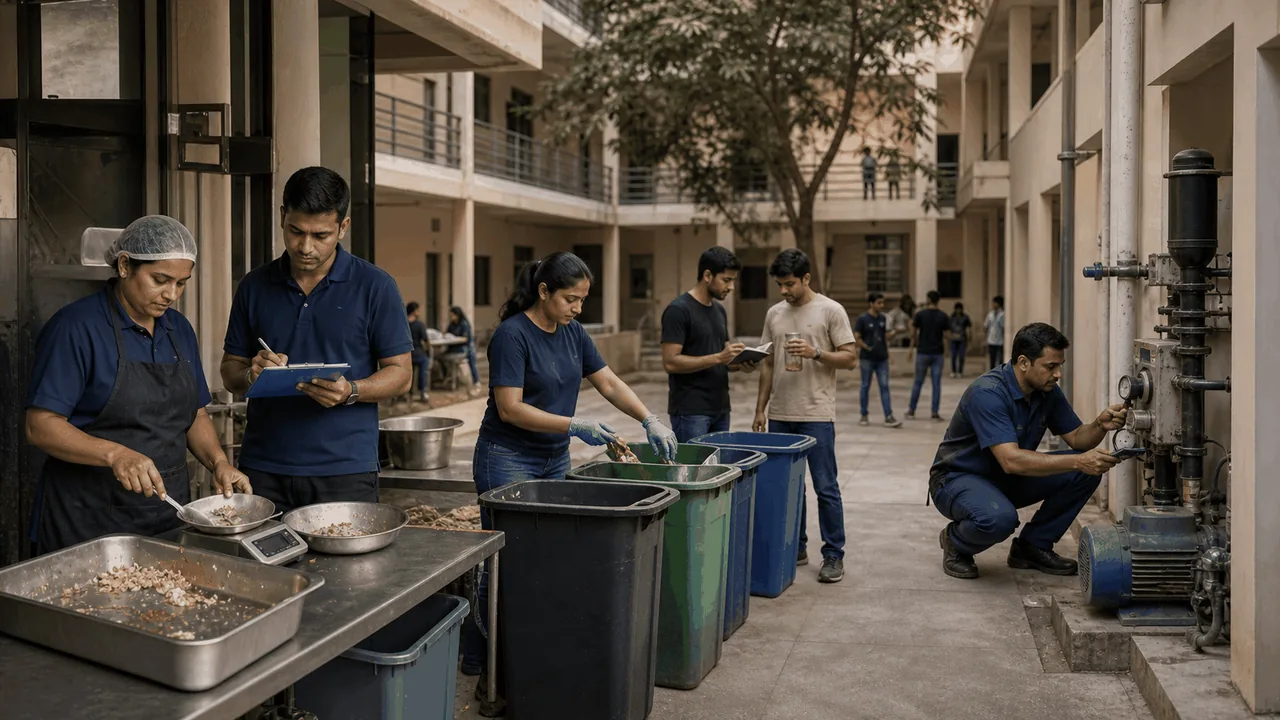
Sustainability begins with a measured baseline and a prevention hierarchy. A hostel should reduce avoidable demand first, then reuse or recover safely, and make claims only from traceable data.
Hostels concentrate meals, water use, electricity, packaging, furniture and waste in a residential environment that operates every day. That makes them a strong place to demonstrate practical sustainability—and a risky place for superficial claims.
The programme should protect hygiene, dignity, accessibility and essential service while reducing avoidable consumption. Residents are partners, but infrastructure and operating decisions remain institutional responsibilities.
Set a baseline and reduction hierarchy
Measure occupancy-adjusted food production and waste, water, electricity, fuel, general waste and selected material flows by building or service where feasible. Document meter coverage, estimates and data gaps.
Prioritise prevention, efficiency, safe reuse, repair and recovery before disposal. Set a baseline year, accountable owner, target, interventions and verification method. Avoid comparing unlike buildings without occupancy, weather or service context.
Prevent food waste safely
Improve meal forecasting, menu acceptance, batch cooking, portion choice and production records. Separate unavoidable preparation waste from served and plate waste so the cause is visible.
Any redistribution or donation must preserve food safety, traceability, time and temperature controls and applicable FSSAI requirements. Composting or authorised treatment should follow source segregation and local arrangements; it cannot justify overproduction.
Reduce water and energy demand
Use a water audit, repair leakage, maintain float valves and pumps, fit appropriate efficient fixtures and monitor abnormal night flow. Reuse systems require safe design, separation, labelling and technical review.
For energy, combine operating schedules, efficient lighting and equipment, ventilation or cooling controls, power-factor or load measures where relevant, preventive maintenance and building improvements. The Bureau of Energy Efficiency and applicable building codes provide a technical basis for qualified action.
Keep materials in useful circulation
Buy durable, repairable and standardised furniture and equipment where lifecycle value supports it. Track condition, parts and warranty; redeploy usable items before buying replacements; and use authorised recycling or disposal for regulated waste.
Provide clearly labelled segregation at the point of use, train housekeeping and contractors, and verify that separated material remains separated through collection. Resident campaigns fail when the downstream system recombines everything.
Common failure modes to avoid
- Reporting total consumption without occupancy or service context.
- Calling waste diversion sustainable while preventable waste keeps rising.
- Installing efficient fixtures without maintaining pressure and leaks.
- Blaming residents for high use caused by faulty infrastructure.
- Publishing carbon or savings claims without method, boundaries and evidence.
Sustainability dashboard
- Food produced, served and wasted by category per meal.
- Water and energy use per occupied bed with data-quality notes.
- Leaks, inefficient assets and corrective-action savings.
- Waste by stream, contamination and authorised handover.
- Repair, reuse, redeployment and avoided purchase.
- Target progress, methodology changes and verified exceptions.
Frequently asked questions
What is the best first sustainability project? Choose a material, measurable loss with a clear owner—often food overproduction, leakage, lighting controls or waste segregation—and verify the result before scaling.
Can treated water be reused in a hostel? Potentially, for approved non-potable uses under applicable technical and public-health requirements. It must be designed, segregated, labelled, monitored and maintained by qualified professionals.
How should resident behaviour be addressed? Provide understandable choices and feedback, but first remove infrastructure and service barriers. Do not shift institutional failures or essential hygiene needs onto residents.
Conclusion
Sustainable hostel operations are visible in fewer avoidable inputs, longer asset life and safer material pathways. Honest measurement turns individual campaigns into a repeatable campus operating discipline.
Official references
- Primary sources for publication and implementation review (accessed 20 August 2026):
- CPCB: salient features of Solid Waste Management Rules
- CPCB: environmental and waste-management rules index
- Ministry of Jal Shakti / Central Water Commission: water audit and conservation guidance
- Bureau of Energy Efficiency: programmes, standards and guidance
- Bureau of Energy Efficiency: energy-efficient buildings
- FSSAI: Schedule 4 hygiene requirements, including catering
- Implementation note: Operational guidance only. Confirm current central, state, local and university requirements and obtain qualified finance, legal, food-safety, procurement, engineering, environmental, information-security or occupational-safety review as applicable.
Revision history
Editorial language, consistency and source audit completed. India-specific operating context retained.
See something we should improve?
Point out a correction, add a missing perspective or share a stronger source.