
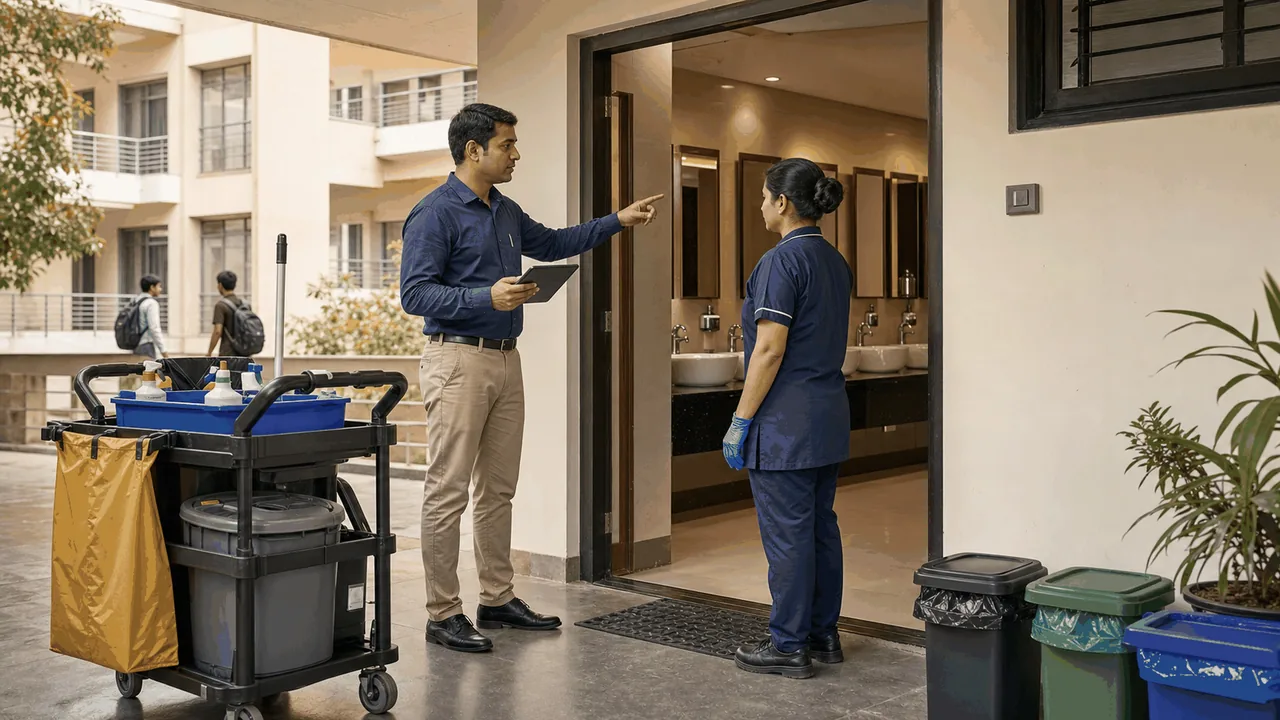
Housekeeping quality should be specified by zone, risk, method, frequency and verification. A signature on a cleaning sheet is evidence of attendance—not proof that a washroom or common area is safe and usable.
Hostel housekeeping runs across bedrooms, corridors, toilets, washrooms, kitchens, waste rooms, study spaces and outdoor approaches. Each zone has a different contamination risk, resident expectation and service window.
The operating model should make the clean condition observable and repeatable while protecting workers and residents from unsafe chemicals, pests, slips and unmanaged waste.
Create a zone-and-risk cleaning plan
Map every serviceable space, surface and fixture. Define who cleans it, the method, chemical or equipment, daily and periodic frequency, safe time window and acceptance standard. High-touch surfaces, shared sanitation and food-adjacent areas need closer control than low-use stores.
Build occupancy peaks, exam periods, monsoon conditions and outbreak directions into the schedule. Deep cleaning is a planned layer, not a substitute for routine cleaning.
Standardise safe work
Provide labelled chemicals, dilution instructions, safety data, PPE, colour-coded tools where appropriate and secure storage away from food and residents. Never mix chemicals unless the manufacturer and approved procedure expressly allow it.
Use warning signs and access control for wet floors or hazardous work. Supervisors should observe technique and correct unsafe shortcuts rather than collecting signatures at the end of a shift.
Integrate waste, sanitation and pest control
Maintain covered bins, source segregation, predictable removal, clean waste rooms and authorised handover. Blocked drains, standing water, food residue, structural gaps and uncontrolled feeding can undermine pest treatments.
Use an integrated pest-management approach: inspect, identify, remove food and harbourage, seal entry points, apply approved control and verify recurrence. Keep treatment records and protect residents, food and water during application.
Audit outcomes and respond to complaints
Audit a representative sample at different times using observable criteria such as odour, visible soil, consumables, drainage, touchpoint condition and waste overflow. Photograph only where privacy permits and record corrective action and recheck.
Treat clustered sanitation complaints, sewage overflow, water contamination or illness as possible incidents requiring facilities, medical or public-health escalation—not ordinary housekeeping tickets.
Common failure modes to avoid
- Using the same frequency and method for every space.
- Refilling unlabelled chemical bottles or mixing cleaners.
- Spraying pests repeatedly without removing the source.
- Auditing only immediately after the morning cleaning round.
- Closing complaints from a supervisor signature without inspecting the outcome.
Housekeeping control checklist
- Complete zone register and approved cleaning frequencies.
- Staff training, PPE and chemical inventory.
- Washroom consumables and drainage condition.
- Waste segregation, removal and handover evidence.
- Pest sightings, treatment, structural correction and recurrence.
- Audit failures, resident complaints and verified rechecks.
Frequently asked questions
How often should common areas be cleaned? Set frequency from use, contamination risk, season and inspection evidence. Shared toilets and high-touch areas may need several service rounds; low-risk areas may need less.
Is pest-control spraying enough? No. Effective control also removes food, water and harbourage, closes entry points, identifies the pest and verifies whether it returned.
Who should audit outsourced housekeeping? An authorised university or independent supervisor should verify outcomes alongside vendor checks, using the agreed standards and resident-impact data.
Conclusion
Clean hostel environments come from designed routines, safe work and verification. When sanitation, waste, pests and resident complaints share one control system, repeat failures become visible and correctable.
Official references
- Primary sources for publication and implementation review (accessed 20 August 2026):
- CPCB: salient features of Solid Waste Management Rules
- CPCB: Guidelines for Management of Sanitary Waste
- FSSAI: Schedule 4 hygiene requirements, including catering
- Bureau of Indian Standards: National Building Code of India 2016
- Implementation note: Operational guidance only. Confirm current central, state, local and university requirements and obtain qualified finance, legal, food-safety, procurement, engineering, environmental, information-security or occupational-safety review as applicable.
Revision history
Editorial language, consistency and source audit completed. India-specific operating context retained.
See something we should improve?
Point out a correction, add a missing perspective or share a stronger source.