
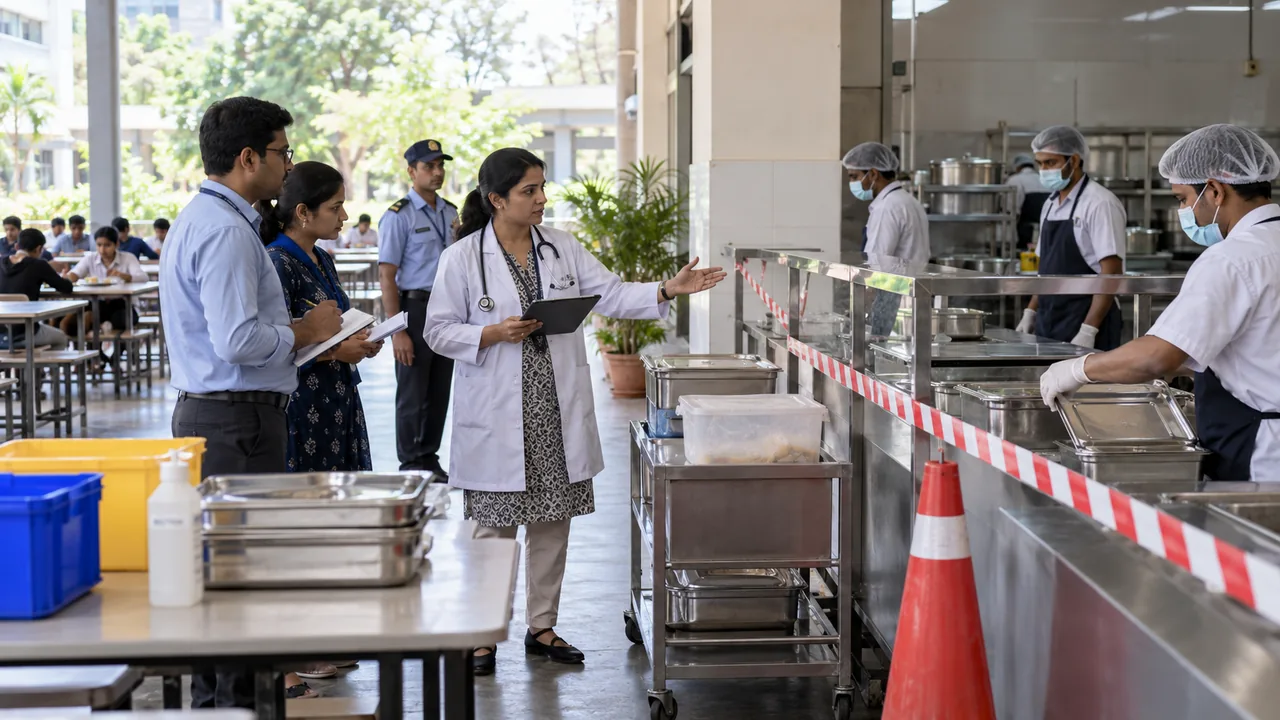
When foodborne illness is suspected, protect people first, stop the potentially implicated service, preserve evidence and records, notify authorised health and food-safety owners and reopen only through a documented competent decision.
Several residents reporting vomiting, diarrhoea, abdominal pain or fever after a shared meal may indicate a food-safety incident, but the cause cannot be assumed from symptoms alone. The mess team must act quickly without diagnosing, blaming a menu item or destroying evidence.
Immediate medical and operational actions
- Activate campus medical and emergency referral arrangements; prioritise severe symptoms, dehydration, altered consciousness and vulnerable individuals.
- Notify the designated food-safety supervisor, mess manager, hostel incident lead and competent institutional authority.
- Stop serving the suspected batch or meal and isolate it from use; do not discard it unless directed by competent authorities.
- Provide safe drinking water and practical information to residents without offering unapproved medicines.
- Begin a time-stamped incident log and a confidential affected-person list for medical coordination.
Preserve evidence and traceability
- Secure available retained food samples, ingredients, packaging, water information and temperature records under authorised handling.
- Preserve menus, production quantities, supplier lots, receiving records, staff rosters, cleaning and pest-control logs.
- Record what was served, where, when and to whom where data is available.
- Do not ask staff to recreate missing records or alter temperatures after the event.
- Follow directions from the food-safety authority, health department and qualified laboratory regarding samples and chain of custody.
Communicate facts and care instructions
Tell residents which symptoms require medical attention, where to report, what service is temporarily changed and when the next update will come. Avoid announcing a confirmed cause until competent investigation establishes it. Provide family updates through authorised channels where appropriate and lawful.
Control cross-contamination and continuity
Separate potentially implicated areas, equipment and food. A qualified owner should decide cleaning, disinfection, staff exclusion, water testing and alternative meal arrangements. Continuity food must come from an approved safe source with documented transport and service controls.
Investigate the complete food pathway
Review procurement, receipt, storage, thawing, preparation, cooking, cooling, holding, service, water, cleaning, staff health and waste. Interview staff without threatening them; fear encourages concealment. Distinguish regulatory investigation, clinical assessment and the university's system review.
Reopening criteria
- Competent authority and institutional approvals obtained where required.
- Suspected source controlled and affected food safely disposed under direction.
- Cleaning, sanitation, water, equipment and pest issues verified.
- Fit and trained food handlers available; staff-health exclusions managed.
- Critical records and monitoring restored.
- Residents informed of reopening, changes and continuing reporting channel.
After-action prevention
Translate findings into a named corrective plan. Verify effectiveness through inspections, temperature and hygiene records, supplier action, training and repeat monitoring. Do not close the incident merely because symptoms have reduced.
Conclusion
A prepared mess responds with care, control and evidence. The aim is not to protect a vendor or assign immediate blame; it is to protect health and enable a competent investigation.
- FSSAI: Schedule 4 hygiene requirements, including catering
- FSSAI catering-sector food-safety guidance
- FSSAI FoSTaC basic catering manual
- Implementation note: notify and follow the current directions of medical, public-health and food-safety authorities; this is not clinical advice.
Revision history
Editorial language, consistency and source audit completed. India-specific operating context retained.
See something we should improve?
Point out a correction, add a missing perspective or share a stronger source.