
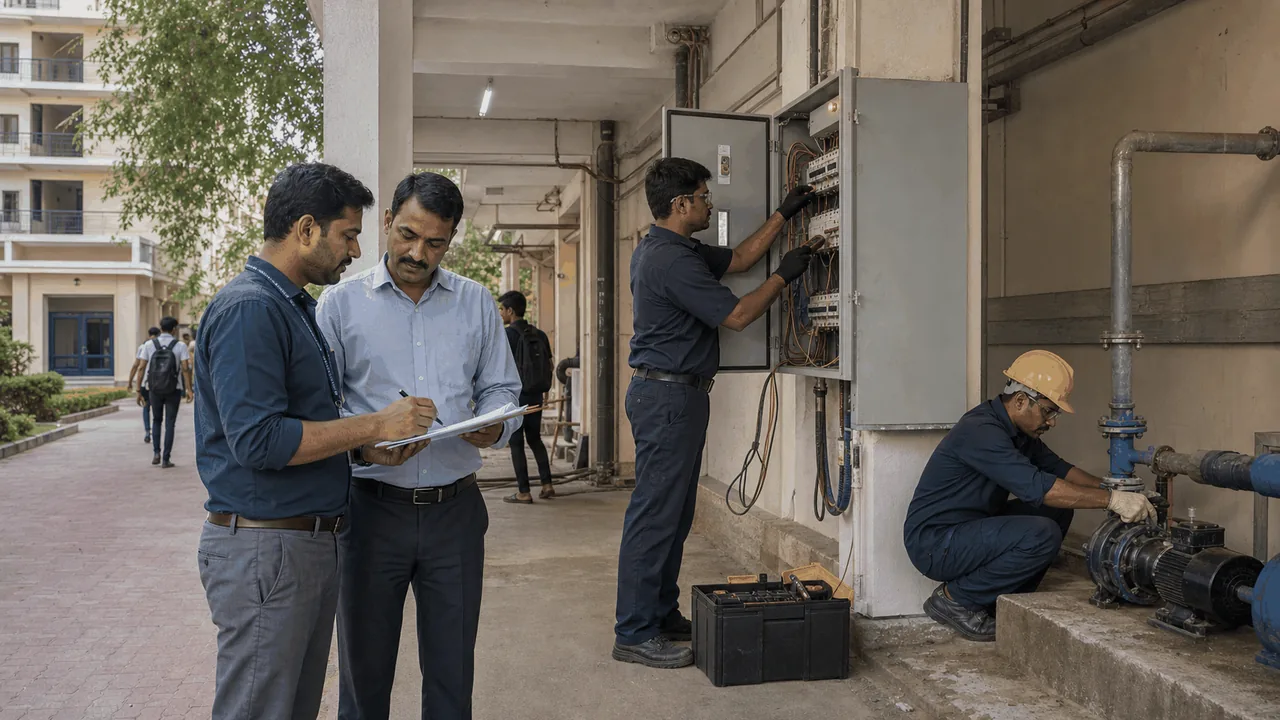
Emergency, reactive and preventive work need different triggers and controls but one asset history. The goal is safe restoration now and less recurrence later—not simply a high ticket-closure count.
A hostel cannot defer every defect to the next shutdown. Water, power, lifts, fire systems, access, sanitation and room fixtures fail while residents are present and academic life continues.
A mature maintenance model protects people first, restores essential service, schedules planned work and learns from repeated failure. It makes responsibility visible across wardens, engineers, technicians and contractors.
Classify assets and work correctly
Create an asset register with location, criticality, maintenance strategy, technical owner, service history and documents. Define emergency work as immediate danger or critical-service failure, reactive work as unplanned restoration and preventive work as scheduled intervention based on time, use or approved inspection.
Publish priority definitions with acknowledgement, attendance, containment and restoration targets. A cosmetic defect in one room and exposed electrical conductors cannot share the same queue.
Run a controlled work-order cycle
Capture exact location, symptom, impact, reporter and safety concern. Triage remotely only where safe; otherwise inspect. Assign a competent person, communicate the expected update, record parts and actions, test restoration and obtain appropriate user or supervisor verification.
If a permanent repair cannot be completed, document the temporary control, residual risk, responsible owner and expiry. Temporary arrangements should not become invisible permanent solutions.
Build a preventive maintenance programme
Start with statutory and manufacturer requirements, safety-critical assets, service impact and failure history. Schedule inspections, cleaning, lubrication, calibration, testing or replacement through competent personnel and approved procedures.
Use planned shutdowns, resident communication, permits and access arrangements. Track planned versus completed work and reasons for deferral; rescheduling without risk review only hides backlog.
Control maintenance safety and recurrence
Apply isolation, lockout, work-at-height, confined-space, hot-work and electrical procedures as applicable. Contractors need induction, competence evidence, permits and supervision. Certified systems such as lifts, fire installations and electrical infrastructure require the appropriate authorised professionals.
Review repeat work orders, mean time between failures, downtime, backlog risk and emergency-call causes. A root-cause action may require design, capacity or procurement change beyond another repair.
Common failure modes to avoid
- Prioritising by complainant seniority rather than safety and impact.
- Closing a work order after technician attendance without testing service.
- Resetting a breaker repeatedly without investigating the fault.
- Deferring preventive work because breakdown tickets consume the team.
- Allowing contractors to work without isolation and permit controls.
Maintenance dashboard
- Open work by priority, age and resident impact.
- Time to acknowledge, contain and restore essential service.
- Preventive work due, completed, deferred and overdue.
- Repeat failure and reopened work by asset.
- Critical spares, contractor response and equipment downtime.
- Temporary controls approaching review or expiry.
Frequently asked questions
Is preventive maintenance always time-based? No. It may be based on calendar, runtime, condition, statutory inspection or manufacturer guidance. Choose the method appropriate to the asset and risk.
Who can close an emergency repair? The competent technical owner should confirm safety and function, with service verification by the affected operation or resident where appropriate.
Should residents see technical notes? They need clear status, safety instructions and restoration information. Restrict sensitive security, personal or technical details that could create risk.
Conclusion
Maintenance performance is the ability to protect, restore and prevent. When work orders connect to asset history and safe verification, the hostel moves from complaint chasing to dependable facilities management.
Official references
- Primary sources for publication and implementation review (accessed 20 August 2026):
- Bureau of Indian Standards: National Building Code of India 2016
- Bureau of Energy Efficiency: programmes, standards and guidance
- Implementation note: Operational guidance only. Confirm current central, state, local and university requirements and obtain qualified finance, legal, food-safety, procurement, engineering, environmental, information-security or occupational-safety review as applicable.
- CPWD Maintenance Manual circulars and updates
Revision history
Editorial language, consistency and source audit completed. India-specific operating context retained.
See something we should improve?
Point out a correction, add a missing perspective or share a stronger source.