
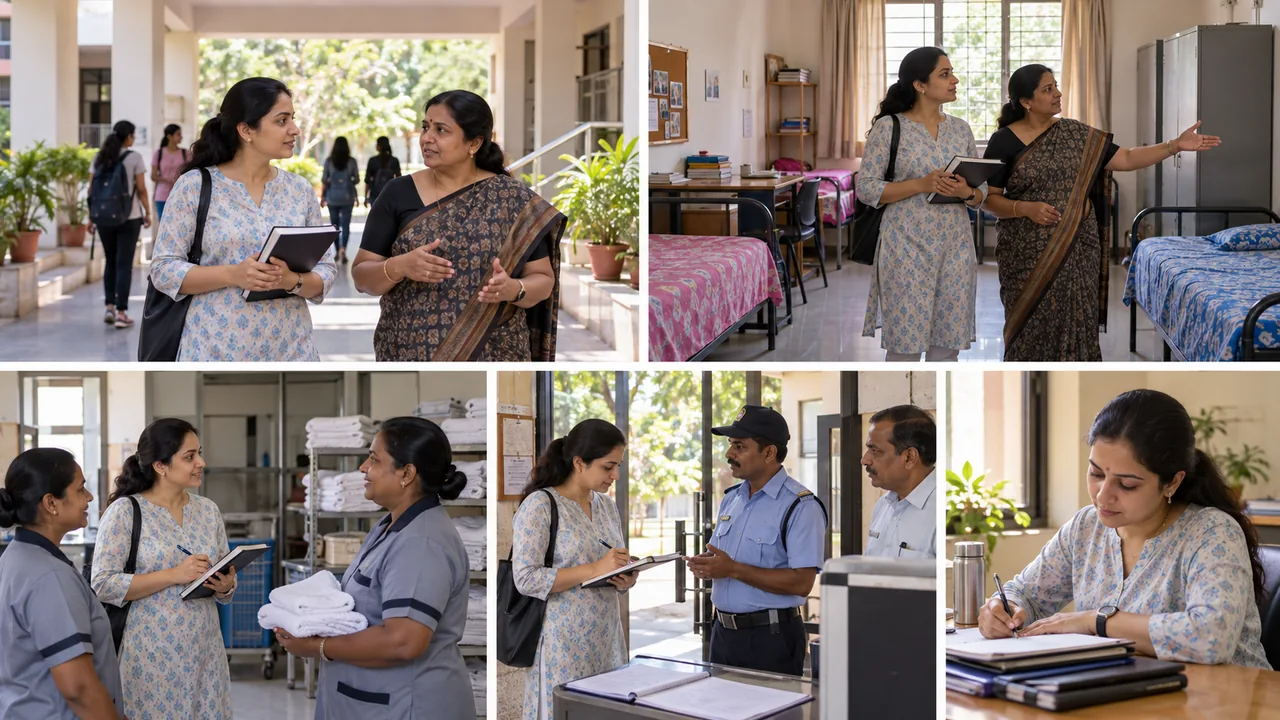
The first month should produce a reliable operating picture, trusted relationships and a short, evidence-led improvement plan—not a rush of new rules.
A new warden inherits routines, informal workarounds and resident expectations that may not appear in any manual. The safest approach is to observe, verify and communicate before changing systems.
Week 1: learn the people, place and risks
- Meet residents, floor representatives and every duty team.
- Walk the building by day and after normal office hours.
- Read policies, emergency plans, rosters and the last three months of incident records.
- Test emergency contacts, escalation routes and critical access.
- Identify residents requiring continuity of support without circulating unnecessary personal details.
Week 2: map how work actually moves
Follow common journeys such as leave approval, room change, complaint resolution and maintenance. Compare the written process with actual practice. Note unclear ownership, repeat data entry, long waiting points and decisions that depend on one person.
Week 3: establish a fair operating rhythm
- Publish resident contact hours and emergency channels.
- Start a short daily operations review and a documented shift handover.
- Agree severity and response expectations for complaints.
- Explain how residents can ask questions, seek support and appeal decisions.
- Close a few visible service gaps without promising a complete transformation.
Week 4: share a 90-day improvement plan
Present a concise baseline: what works, what presents risk, what residents and staff repeatedly raised, and what will be improved first. Assign owners and measures. Keep listening mechanisms open so the plan can change when better evidence appears.
Sources and professional review anchors
- Primary sources for role and implementation review:
- UGC student-centric regulations and guidance
- National Anti-Ragging Programme advisories
- DGHS National Mental Health Programme and Tele-MANAS
- Implementation note: adapt duties, authority, training and escalation to the university’s approved role charter, current law and competent professional advice.
Revision history
Editorial language, consistency and source audit completed. India-specific operating context retained.
See something we should improve?
Point out a correction, add a missing perspective or share a stronger source.