
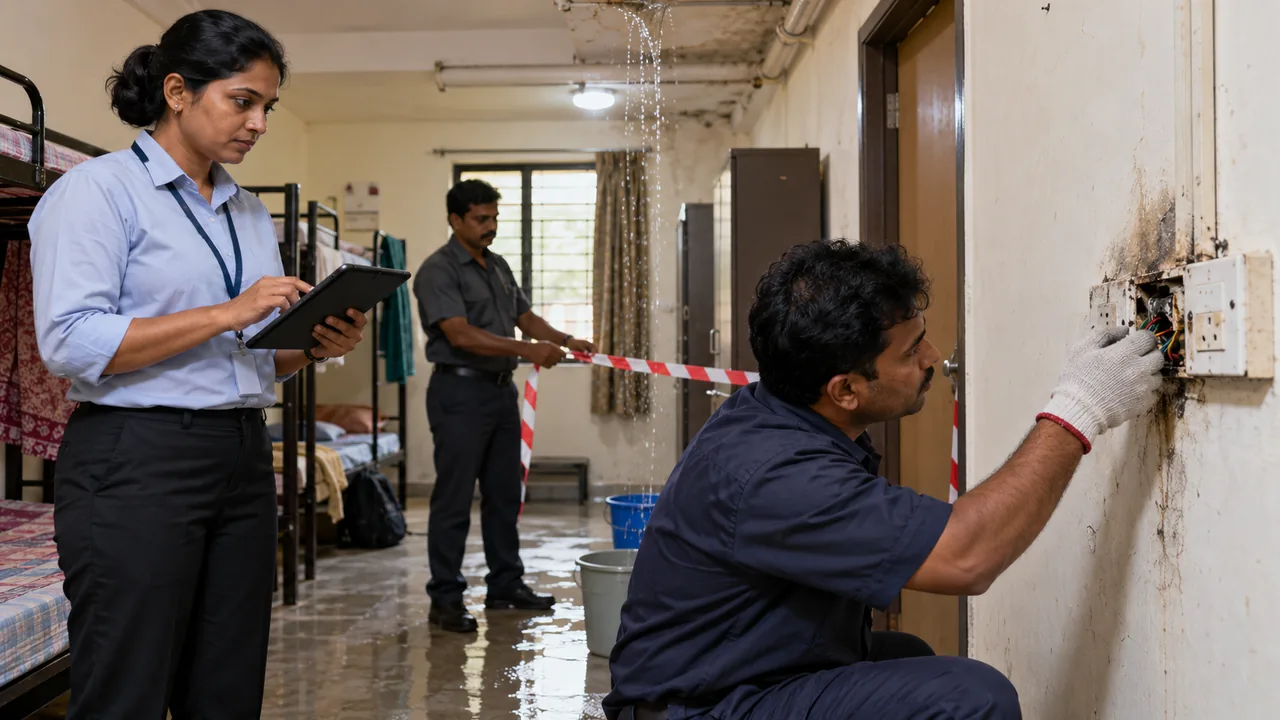
The most dangerous file is not the one containing a reported risk; it is the risk that was known, left ownerless and allowed to become harm.
Negligence is not established merely because a bad outcome occurred. The facts matter: what danger was reasonably foreseeable, what duty and authority existed, what response was reasonable in the circumstances, and whether an act or omission caused the harm. These questions require case-specific legal assessment.
Operationally, hostel teams should focus on what they can control: identify known hazards, classify urgency, assign an owner, provide interim protection and preserve proof of escalation and closure. Section 106 of the Bharatiya Nyaya Sanhita addresses death caused by a rash or negligent act, making preventable safety failures a matter far beyond internal performance review.
Warning patterns that demand action
- Repeated reports of electrical sparking, structural damage, blocked exits or failed alarms.
- A student expressing immediate self-harm risk, severe medical symptoms or fear of violence.
- A resident missing after defined checks and risk indicators.
- Several students reporting similar foodborne-illness symptoms.
- Known harassment, ragging or threats treated as an informal interpersonal disagreement.
Use a reasonable-response test
Ask what a trained person in the same role could reasonably do with the time, information and resources available. Immediate safety action may be simple—calling emergency services, stopping use of equipment or food, separating people, maintaining observation or moving residents to a safe area. Do not wait for a perfect report before addressing imminent danger.
Escalation does not end responsibility automatically
Sending one message is not a safe handover when the risk is immediate and no one responds. Use the backup route, state the urgency, record each attempt and remain with the safety problem until a competent owner accepts it or emergency services take control.
Never manufacture protection after the event
- Do not backdate inspection, attendance or patrol records.
- Do not delete unanswered messages or rewrite an original incident entry.
- Do not pressure a student or employee to withdraw a concern.
- Do not describe an unverified event as harmless to reduce attention.
- Do not create a scapegoat instead of examining the failed system.
The defensible prevention file
- Hazard or concern reported with date and source.
- Urgency and interim control recorded.
- Named owner and deadline assigned.
- Escalation and resource requests preserved.
- Closure verified physically or through reliable evidence.
- Recurring failures reviewed by senior leadership.
Conclusion
The goal is not defensive paperwork. It is a reliable chain from warning to action. Truthful records become protective because they show that the team used reasonable judgment and kept safety ahead of convenience or reputation.
Official references
- India Code: Bharatiya Nyaya Sanhita, 2023
- UGC student-centric regulations, including grievance, anti-ragging, equity and sexual-harassment requirements
- UGC guidelines on students' health, welfare and psychological and emotional wellbeing
- India Code: Disaster Management Act, 2005
- Implementation note: this guide is general operational education, not legal advice. Confirm current Central and State law, university statutes, service rules and case-specific advice before relying on it.
Revision history
Editorial language, consistency and source audit completed. India-specific operating context retained.
See something we should improve?
Point out a correction, add a missing perspective or share a stronger source.