
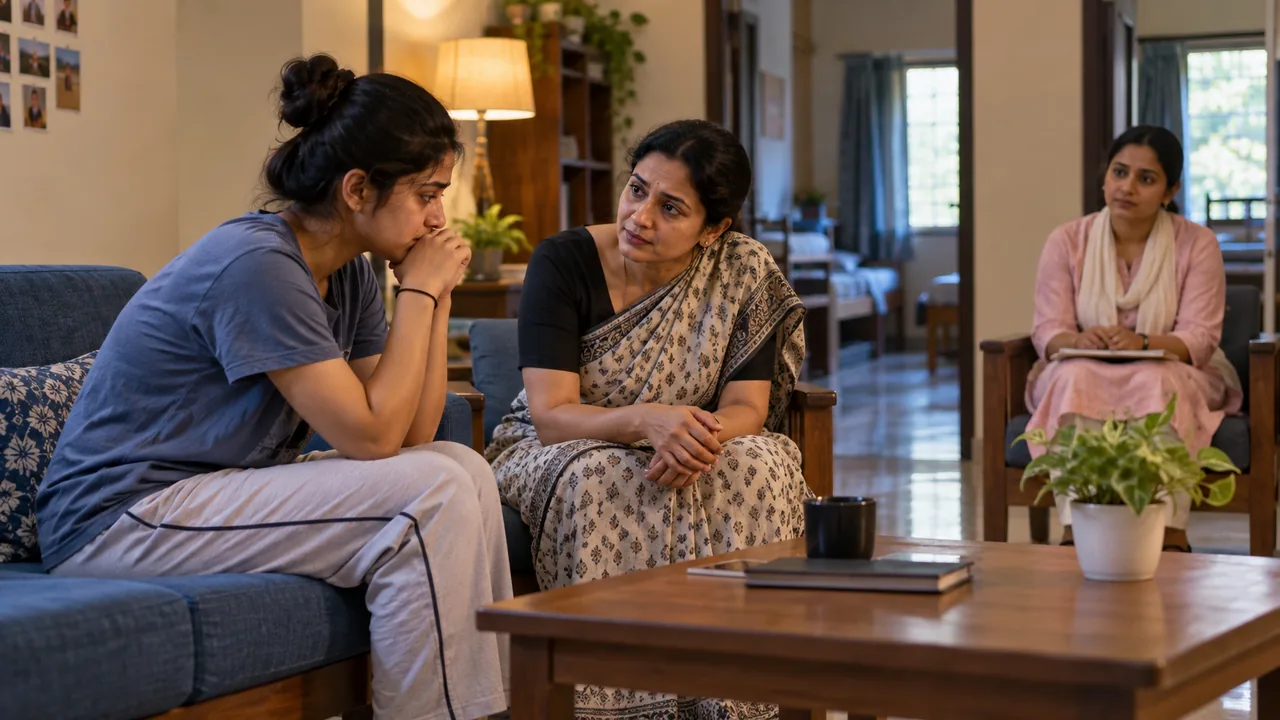
The warden's first task is not to win the argument. It is to reduce immediate risk, understand what the student needs, explain the next authorised step and ensure the concern reaches the right owner.
A single sentence from a warden can either open a route to safety or close it. Students often approach residential staff at the worst moment: after a conflict, during a panic, late at night or when they feel that nobody will listen. Calm communication is therefore an operating skill, not a matter of personality.
Start with safety, privacy and pace
- Move the conversation away from an audience when safe, while following safeguarding requirements.
- Use a calm voice, one question at a time and enough physical space.
- Ask whether anyone is in immediate danger or needs urgent medical help.
- Call trained support early when there is violence, self-harm risk, severe impairment or another emergency. Do not manage high risk alone.
Use a four-part response
First acknowledge: ‘I can see this is serious for you.’ Second clarify: ‘Tell me what happened and what you need right now.’ Third state the boundary: ‘I cannot decide the disciplinary outcome tonight.’ Fourth give the next step: ‘I will record this and call the duty officer now; we will update you by 10 a.m.’ This sequence validates the concern without promising an outcome outside the warden's authority.
Words and behaviours to avoid
- ‘Stop creating drama’, ‘Everyone has problems’ or ‘You will ruin the university's name.’
- Threats involving parents, academics, immigration status, scholarships or future employment.
- Public questioning, sarcasm, labels, moral judgement or arguments about who is more respected.
- Demanding a detailed written statement while the student is medically or emotionally unstable.
- Promising confidentiality when safety or law may require controlled escalation.
When the student is angry
Name the practical issue without matching the volume. Offer two safe options where possible: continue privately now or speak with the duty officer at a specified time. If behaviour becomes unsafe, create distance, call support and use short directions. De-escalation does not require accepting abuse or abandoning a legitimate rule.
When the student appears hopeless or unsafe
Take direct statements about self-harm or not wanting to live seriously. Stay with the student or maintain appropriate supervision, remove immediate hazards only when safe and authorised, and activate the institution's emergency and mental-health pathway. Wardens should not diagnose, counsel beyond their training or leave a high-risk student with an untrained peer.
Close the conversation responsibly
- Repeat what you understood and correct factual misunderstandings.
- Name the next owner, action and update time.
- Record direct observations and the student's own important words without labels.
- Check whether the student can safely return to the room or needs another arrangement.
- Follow up when promised, even if the final decision is still pending.
A five-minute team practice
During a shift briefing, give one person a scenario and another the warden role. Practise the four-part response, then ask: Did the warden check safety? Did the student receive a clear next step? Was anything promised outside authority? Repetition builds a calm default under pressure.
Conclusion
Respectful language is not softness. It improves information quality, reduces escalation and helps the university act on risk before a difficult interaction becomes a larger institutional failure.
- National Task Force: Framework Guidelines for Emotional and Mental Wellbeing of Students in HEIs
- WHO: mental health and the education sector
- Implementation note: use the university's approved emergency, safeguarding and mental-health protocols; this guide does not replace trained assessment.
- UGC guidance on student health, welfare and emotional wellbeing
- DGHS National Mental Health Programme and Tele-MANAS
Revision history
Editorial language, consistency and source audit completed. India-specific operating context retained.
See something we should improve?
Point out a correction, add a missing perspective or share a stronger source.