
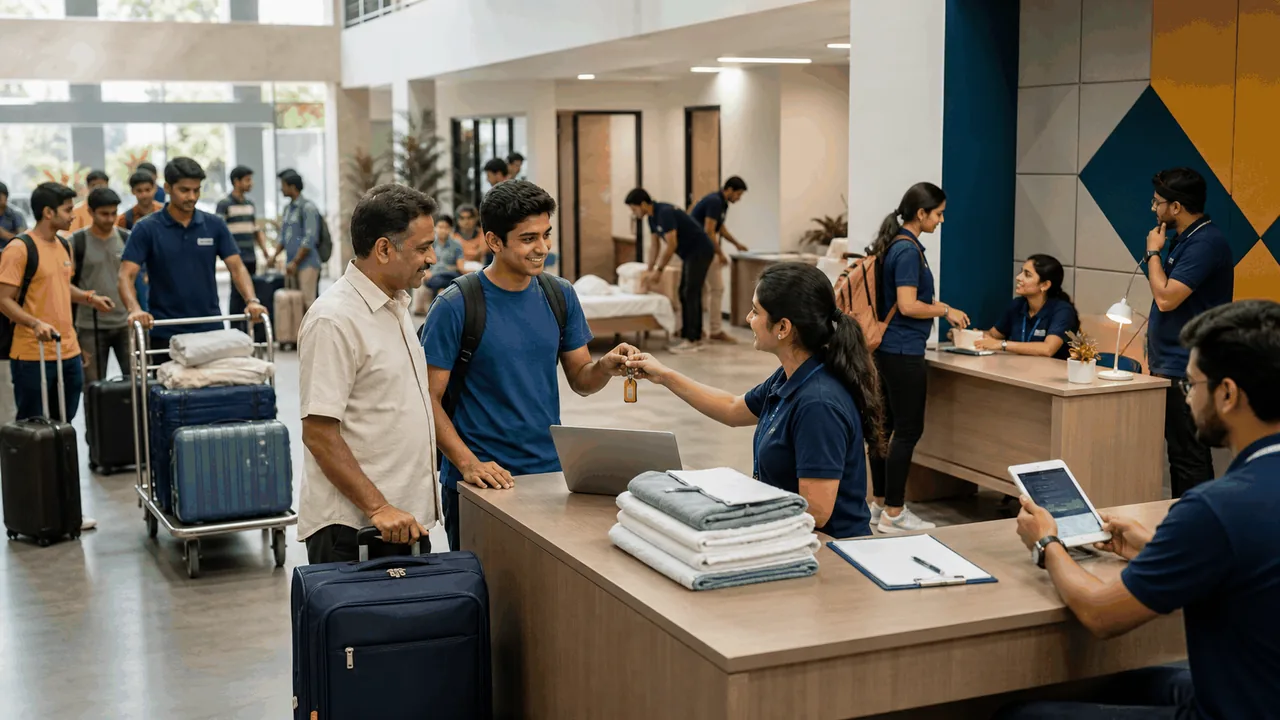
Check-in is complete only when the right resident can safely occupy a ready room and both sides hold the same record of the handover.
Check-in day combines high volume with high emotion. Students may arrive after long journeys, parents want quick answers, rooms can fail last-minute inspection and finance or admission records may not match. The front desk must remain welcoming without bypassing essential controls.
The best check-in process moves verified standard cases quickly and directs exceptions to a separate resolution desk.
Why this matters in an Indian university hostel
Check-in creates the institution's first evidence that an allotted bed is physically occupied. Admission, allotment, payment and planned arrival are not substitutes for confirmed handover.
Design the day around two flows: a fast standard lane for verified cases and a staffed exception lane for mismatches. This prevents one difficult case from blocking hundreds of routine arrivals.
Prepare rooms and records
Complete room-readiness inspection before arrival: cleaning, furniture, electrical points, water, locks, windows, safety equipment and approved accessibility features. Photograph or record the condition consistently.
Pre-match admitted students with assignments, payments, undertakings and approved accommodations. Do not wait for the student to stand at the counter before discovering a known mismatch.
The standard check-in sequence
- Welcome and identify the resident.
- Confirm assignment and critical eligibility status.
- Issue or activate the approved access credential.
- Record room and inventory condition with resident acknowledgement.
- Provide essential safety and support information.
- Confirm emergency contact and authorized communication preferences.
- Mark physical occupancy only after handover is complete.
Create a separate exception desk
Typical exceptions include payment reconciliation, wrong allotment, unavailable room, missing accommodation, identity mismatch, late arrival and damaged inventory. Give the student a case number, owner and expected next update.
Never send the student repeatedly between finance, admissions and the hostel office. The organisation should coordinate behind the case.
Manage keys and credentials
Treat keys, cards and mobile credentials as controlled assets. Record issue, replacement, temporary access, deactivation and return. Master-key access needs stricter authorization and audit.
If the access system is offline, use a documented contingency that preserves identity verification and later reconciliation.
Room-condition evidence
Use a standard inventory list and allow the resident to add visible defects within a defined verification window. Distinguish pre-existing damage from later damage.
Evidence protects both the resident and institution, but avoid unnecessary images of personal belongings after occupancy begins.
Common failure modes to avoid
Before check-in opens, test the arrival workflow against these common failure patterns:
- Discovering known payment, allocation or accessibility exceptions only when the student reaches the counter.
- Marking a resident occupied before the bed, key and inventory are actually handed over.
- Using photographs inconsistently or capturing personal belongings after occupancy without need.
- Allowing offline or temporary credentials to remain unreconciled after systems recover.
Peak-day measures
- Arrivals per hour and average check-in time.
- Queue length and exception rate.
- Rooms not ready at arrival.
- Access credentials failing activation.
- Open room defects by priority.
- Residents checked in but not inducted.
Check-in checklist
- Counters, signage and accessible route tested.
- Staff roles and escalation desk assigned.
- Room and bed status frozen for the arrival window.
- Credentials and contingency process ready.
- Emergency and first-night information provided.
- End-of-day physical occupancy reconciled.
Frequently asked questions
Can check-in be fully self-service? Pre-check-in can reduce queues, but physical occupancy, room handover and exceptions still need appropriate verification.
Should parents sign the room inventory? The resident should normally acknowledge their own room condition; follow institutional policy for minors or special circumstances.
What if a room is not ready? Provide a documented temporary arrangement, protect belongings and give a specific owner and resolution time.
Conclusion
A good check-in ends with agreement between the physical room and the digital record: the correct resident occupies a ready bed, access works, condition is acknowledged, essential induction is complete and every exception has an owner. Queue speed matters, but control and dignity matter more.
Official references
- Primary sources for publication and implementation review (accessed 17 August 2026):
- National Anti-Ragging Portal: regulations, compliance material and helpline
- DEPwD: notified accessibility standards and guidelines, including higher education
- MeitY: Digital Personal Data Protection Rules, 2025 and phased enforcement material
- Implementation note: This article provides operational guidance, not institution-specific legal advice. Confirm the provisions currently in force, plus applicable state, local and university requirements.
Revision history
Editorial language, consistency and source audit completed. India-specific operating context retained.
See something we should improve?
Point out a correction, add a missing perspective or share a stronger source.