
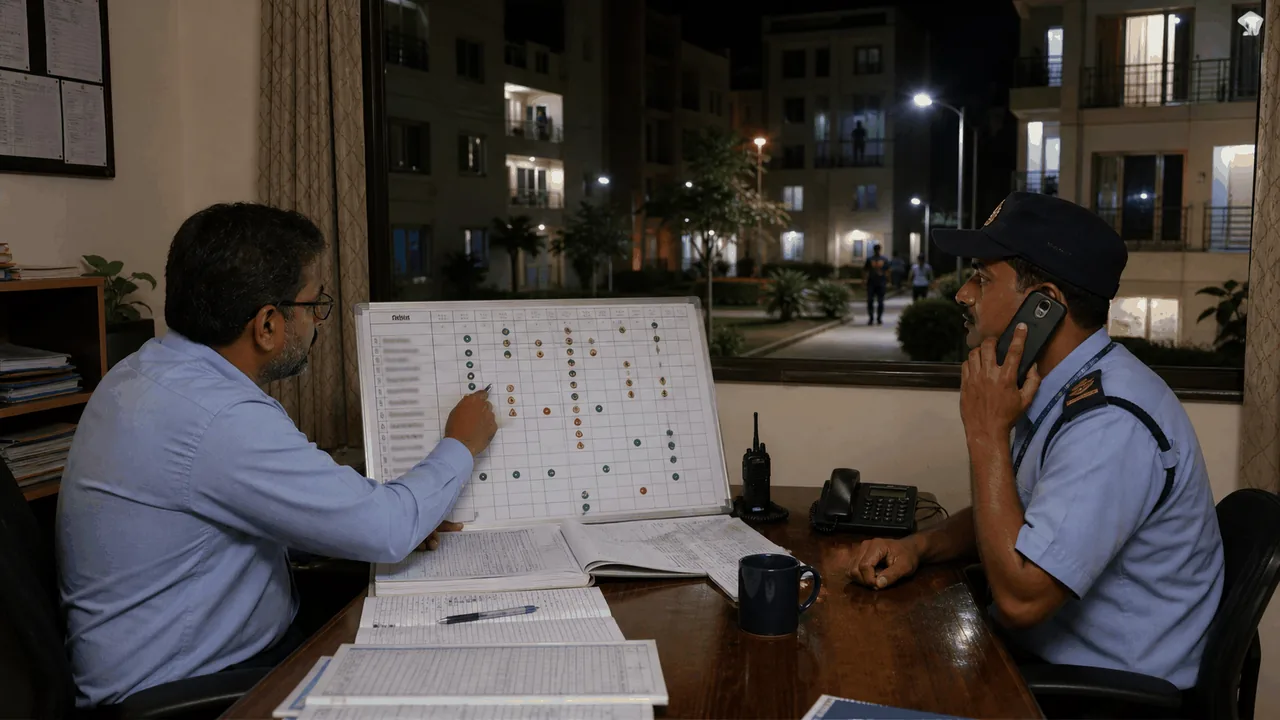
Attendance controls should produce timely safety action, not merely a nightly percentage or punitive record.
Universities use night attendance and in-time rules to understand whether residents are safe and accounted for. The process becomes unreliable when leave, late classes, hospital visits, device failures and gate records are not reconciled before alerts begin.
A strong system distinguishes a late resident, an approved absence, a data mismatch and a genuinely unaccounted-for resident.
Why this matters in an Indian university hostel
Night attendance is useful only when the expected-resident list is accurate. Approved leave, late academic activity, hospital movement, transport delays and system outages must be reconciled before staff interpret an absence as risk.
The protocol should protect adult resident privacy while preserving urgent action. Parent or guardian communication, security involvement and external escalation need risk-based decision rules rather than automatic use for every late entry.
Define the purpose and population
State who is covered, when attendance is expected, how approved leave or academic activity is represented and whether rules differ by programme or residence. Review differences for fairness, safety and non-discrimination.
Attendance is a safety control, not proof of a student's location throughout the night.
Use multiple verification signals
Possible signals include resident confirmation, gate access, approved leave, academic movement, manual warden verification and authorized exceptions. No single signal is perfect.
When technology fails, record the outage and use a controlled alternative rather than treating every resident as absent.
Reconcile before escalation
- Remove approved leave and known institutional movement.
- Check late-entry or transport exceptions.
- Confirm system and device health.
- Contact the resident through approved channels.
- Check roommate or floor information without spreading alarm.
- Escalate at the defined threshold based on risk and vulnerability.
Design a missing-resident protocol
The protocol should define elapsed-time thresholds, attempts required, information to gather, senior notification, parent or guardian contact rules, campus security action and when external authorities may be contacted.
Risk can override time thresholds. A credible self-harm concern, medical vulnerability, threat or unusual disappearance needs immediate escalation.
Handle late entry separately
A late entry can create a conduct or support conversation, but it is not automatically a missing-resident case once safety is confirmed. Apply published rules and allow the resident to explain.
Repeated lateness may reveal transport, timetable, employment, caregiving or welfare issues that require a different response.
Common failure modes to avoid
Before attendance goes live, test the night-accounting process against these common failure patterns:
- Treating a biometric, gate or mobile signal as conclusive proof of presence or absence.
- Escalating from an unreconciled data mismatch and spreading unnecessary alarm.
- Using safety attendance primarily as a punitive in-time register.
- Closing a located-resident alert without correcting the record or assigning welfare follow-up.
Attendance dashboard
- Expected residents and verified presence.
- Approved absence and late-entry exceptions.
- Unreconciled records by elapsed time.
- Residents in active missing-person escalation.
- System failures and manual verifications.
- Repeat exceptions requiring follow-up.
Night control checklist
- Expected population calculated correctly.
- Leave and institutional movement synchronized.
- Device failure identified before alerts.
- Contact attempts recorded.
- Risk-based escalation followed.
- Morning reconciliation and welfare follow-up completed.
Frequently asked questions
Should parents be notified for every late entry? Universities should follow approved policy, student age, consent, risk and legal requirements rather than using one automatic rule for every case.
Is CCTV enough to confirm presence? No. CCTV may support a specific review but should not replace a defined attendance and privacy framework.
When is a case closed? After the resident is safely located, records are reconciled and any required welfare or conduct follow-up has an owner.
Conclusion
The goal of night attendance is not a perfect percentage. It is to identify the genuinely unaccounted-for resident quickly, act proportionately and preserve a clear timeline of checks and decisions. Accuracy comes from reconciliation; safety comes from risk-aware escalation.
Official references
- Primary sources for publication and implementation review (accessed 17 August 2026):
- MeitY: Digital Personal Data Protection Rules, 2025 and phased enforcement material
- UGC student-centric regulations, including student grievance and anti-ragging regulations
- National Anti-Ragging Portal: regulations, compliance material and helpline
- Implementation note: This article provides operational guidance, not institution-specific legal advice. Confirm the provisions currently in force, plus applicable state, local and university requirements.
Revision history
Editorial language, consistency and source audit completed. India-specific operating context retained.
See something we should improve?
Point out a correction, add a missing perspective or share a stronger source.