
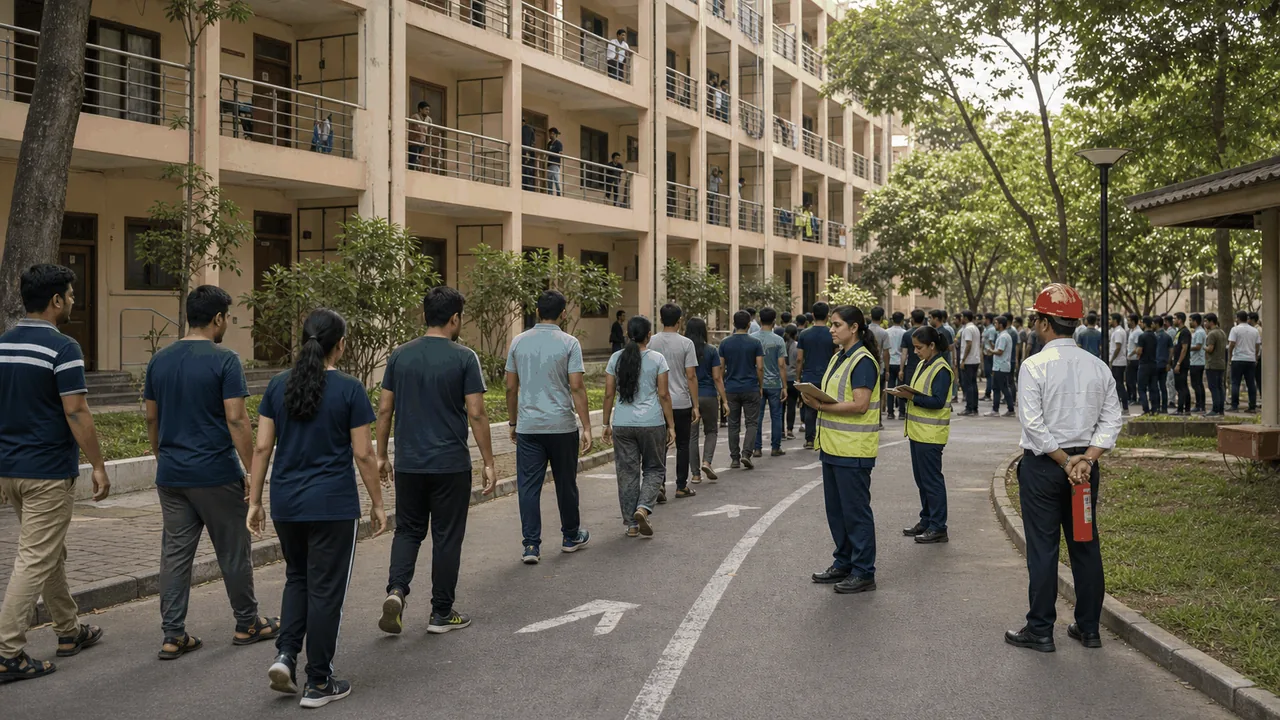
A fire plan is credible only when exits work, alarms can be heard, people know where to go and the hostel can account for residents under real night-time conditions.
Hostels combine sleeping occupants, high density, cooking or electrical risks, locked access points, visitors and residents who may need assistance. A plan copied from an office building will not address these conditions.
Fire and disaster arrangements must be designed and certified by competent professionals under current state, local, fire and building requirements. Wardens operate the plan; they do not replace technical assessment.
Begin with lawful building and risk assessment
Confirm occupancy classification, sanctioned capacity, fire approvals, exit design, detection and alarm coverage, emergency lighting, electrical safety, equipment, water systems and access for responders with competent professionals and authorities.
Maintain a defect register and prohibit changes that compromise compartments, stairs, doors, corridors or responder access. Temporary storage and charging practices can create risk even in an approved building.
Make evacuation usable at night
Post simple floor-specific instructions, assembly points and alternative routes. Assign day and night roles for alarm confirmation, emergency calling, floor sweep only where safe, gate access, assembly control and liaison with responders.
Never require staff to re-enter or delay evacuation to complete attendance. Resident accounting supports rescue information; it does not override life safety.
Plan for residents who need assistance
Develop individual or area-based emergency assistance arrangements with residents who may have mobility, sensory, cognitive or temporary impairments. Use accessible alarms, refuge or evacuation provisions approved for the building and trained assistance.
Do not assume roommates will carry or rescue another resident. Professional design, equipment and assigned trained roles are required.
Run drills that test the system
Vary drills across day, night, occupancy and blocked-route scenarios under competent supervision. Record alarm reach, movement, congestion, accountability, equipment or door failures and resident feedback.
A fast drill is not automatically a good drill. The objective is safe behaviour and discovery of weak controls, followed by corrective action.
Common failure modes to avoid
- Locked or obstructed exits and propped fire doors.
- Treating extinguisher presence as a complete fire system.
- Announcing every drill so precisely that no operating weakness appears.
- Leaving residents with disabilities out of drills.
- Recording findings without an owner and completion deadline.
Fire and disaster readiness checklist
- Approvals, inspections and technical records are current.
- Exits, alarms, lighting and responder access are checked.
- Day and night roles are assigned and trained.
- Inclusive evacuation arrangements are documented.
- Assembly and resident-accounting processes are practised.
- Drill findings and defects are tracked to verified closure.
Frequently asked questions
How often should drills occur? Follow applicable fire, building, state, local and university requirements, then set frequency based on risk and resident turnover with competent professional advice.
Should wardens fight a fire? Life safety and alarm activation come first. Only trained people should use suitable equipment on a small, safe-to-approach fire without delaying evacuation.
Can biometric attendance be used for evacuation accounting? It may provide one signal but can be unavailable or inaccurate. Use a resilient method and never delay evacuation to create a perfect list.
Conclusion
Preparedness is the combination of sound infrastructure, working controls, trained roles, inclusive evacuation and honest drills. Every defect discovered before an emergency is an opportunity to prevent harm.
Official references
- Primary sources for publication and implementation review (accessed 20 August 2026):
- Bureau of Indian Standards: National Building Code of India 2016
- Ministry of Home Affairs: Emergency Response Support System 112
- DEPwD: notified accessibility standards and guidelines, including higher education
- Implementation note: Operational guidance only. Confirm current central, state, local and university requirements and obtain qualified legal, clinical, fire-safety, accessibility or safeguarding review as applicable.
Revision history
Editorial language, consistency and source audit completed. India-specific operating context retained.
See something we should improve?
Point out a correction, add a missing perspective or share a stronger source.