
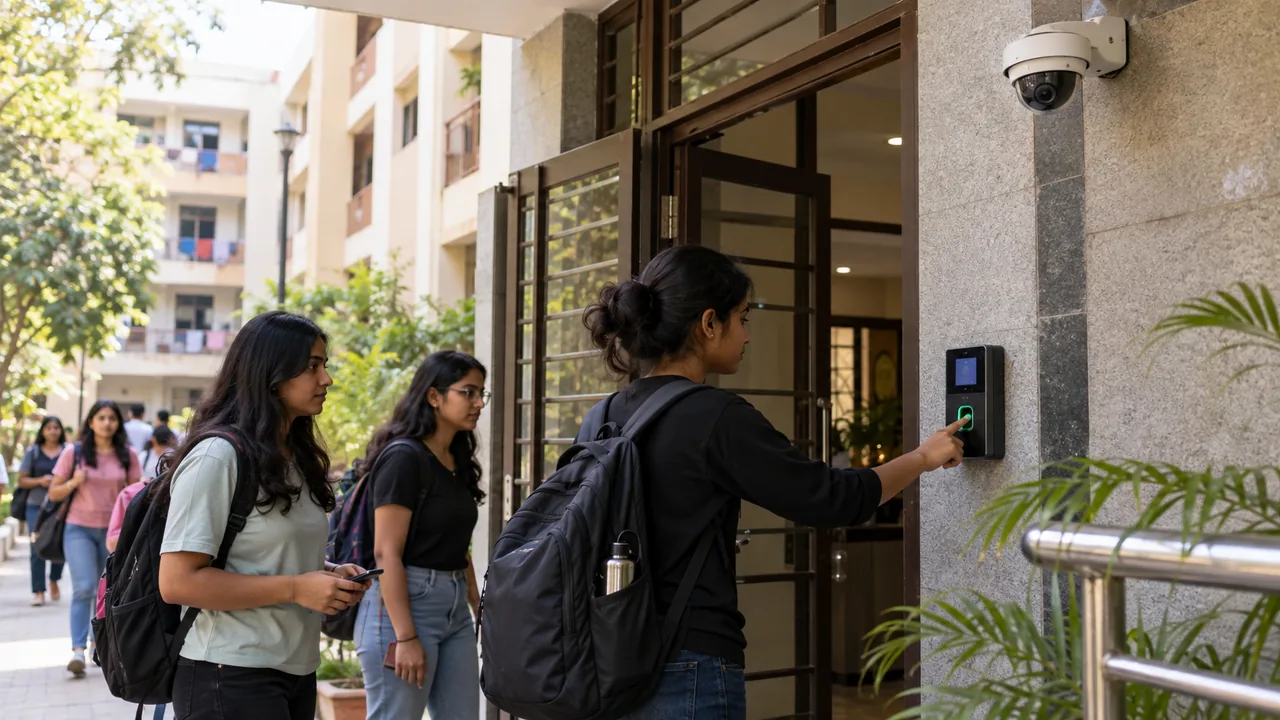
A security technology should have a specific purpose, minimum necessary data, controlled access, defined retention and human accountability. Collecting more data because storage is available creates risk without proving safety.
Hostels use CCTV, access cards, visitor records, attendance tools and sometimes biometrics to support safety and operations. These systems also create detailed information about where students live and move. The institution must therefore govern each use as a safety decision and a personal-data responsibility.
Begin with purpose and necessity
- State the exact problem the system is expected to address.
- Assess a less intrusive alternative and document why it is insufficient.
- Define where collection is prohibited or inappropriate, especially private residential areas.
- Identify the lawful basis, accountable data owner, service provider and complaint channel.
- Set success measures; do not assume installation itself proves effectiveness.
Give residents understandable notice
Explain what is collected, for what purpose, who may access it, how long it is retained, how a resident can raise a concern and whether a meaningful alternative exists. Signage should be visible, but a sign alone is not a complete governance process.
Apply strict access and retention controls
- Use named role-based accounts, multi-factor protection where appropriate and access logs.
- Prohibit downloading to personal phones, informal sharing and curiosity viewing.
- Define routine deletion periods by data type and a documented legal-hold process for specific incidents.
- Review vendor access, subcontractors, breach notification, deletion and data-return obligations.
- Test whether restored backups and exported clips remain protected.
Use biometrics cautiously
Biometric identifiers are difficult to replace if compromised. Require senior risk, legal, security and technical review before deployment. Examine accuracy across user groups, fallback access, disability and injury, false rejection, spoofing, data location, template storage and the consequences when the system fails.
Keep consequential decisions human-accountable
An access or attendance alert is a signal, not proof of misconduct or danger. Staff should verify context, allow correction and follow fair process. Never use automated output to publicly label, punish or deny essential residential access without authorised human review.
Prepare for requests and breaches
- Create a route for residents to ask what data is used and raise an inaccuracy or misuse concern.
- Maintain an incident plan for unauthorised access, lost devices, exposed credentials or improper sharing.
- Preserve evidence of the breach while containing further access.
- Escalate notifications and remedies under current law, contract and university policy.
Quarterly governance review
Review necessity, access logs, overrides, complaints, false matches, downtime, retained footage, vendor access and whether the technology achieved its safety purpose. Decommission collection that no longer has a justified use.
Conclusion
Trustworthy safety systems are visible, limited and accountable. A hostel should be able to explain not only how surveillance works, but why each collection remains necessary and who will answer when it causes harm.
- MeitY: Digital Personal Data Protection Rules, 2025 and enforcement timeline
- NITI Aayog: Responsible AI use-case approach for facial recognition technology
- Implementation note: obtain current privacy, cybersecurity, employment, contract and sector-specific legal review before deployment.
- MeitY acts and policies, including digital personal-data law
- Digital Personal Data Protection Act, 2023
Revision history
Editorial language, consistency and source audit completed. India-specific operating context retained.
See something we should improve?
Point out a correction, add a missing perspective or share a stronger source.